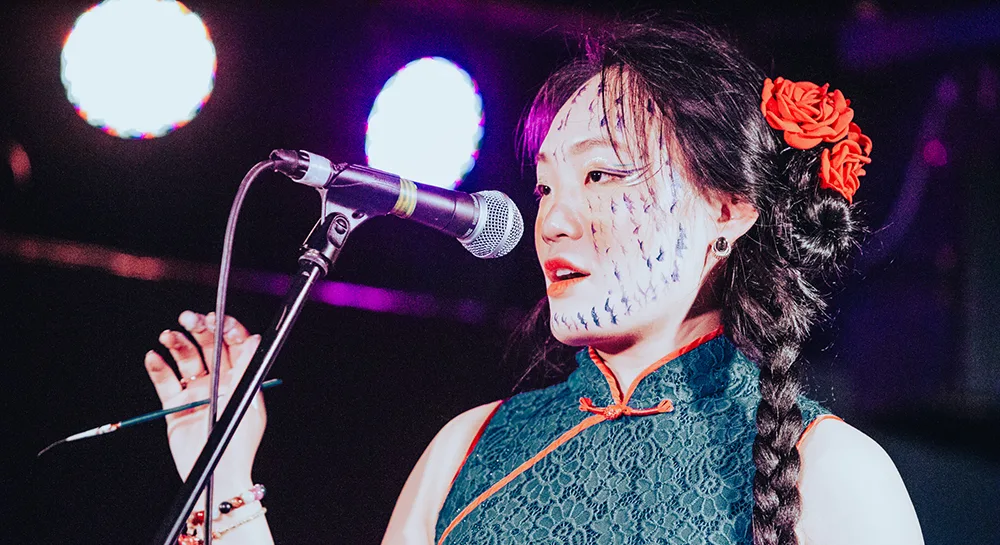
Please tell us a little about your education and career background.
I grew up in a working-class family in a small rural village in southern China and was the first person in my family to attend university. Although neither of my parents had the opportunity to complete middle school, they supported me without reservation.
After completing my BA in Internet and New Media at Shenzhen University, I worked for an international film festival before becoming a freelance photographer, producing commercial visual campaigns for brands including Starbucks in China.
Today, I am an interdisciplinary artist, writer, producer and freelance artist facilitator based in Edinburgh. My practice spans performance, participatory art and socially engaged projects, exploring memory, cultural heritage and human connection through collaboration with communities.
What made you want to study Contemporary Art Practice at Edinburgh?
Although I enjoyed working in the creative industries, I gradually realised that I wanted to create work that explored deeper about identity, emotion and connection. I was looking for an environment where I could experiment across different art forms rather than stay within one discipline. I want to create something eternal and beautiful.
Edinburgh stood out because of its vibrant artistic community, its international outlook and its encouragement of interdisciplinary practice. I wanted to study somewhere that valued curiosity, collaboration and experimentation.
Looking back, I realise that Edinburgh gave me much more than an education. It transformed the way I understood art. Instead of seeing it simply as something to make, I began to see it as a way of asking questions, preserving memory, building communities and creating conversations across cultures.
Most importantly, Edinburgh gave me the freedom to discover my own artistic language.
“Edinburgh stood out because of its vibrant artistic community, its international outlook and its encouragement of interdisciplinary practice.”
Jiayi Chen
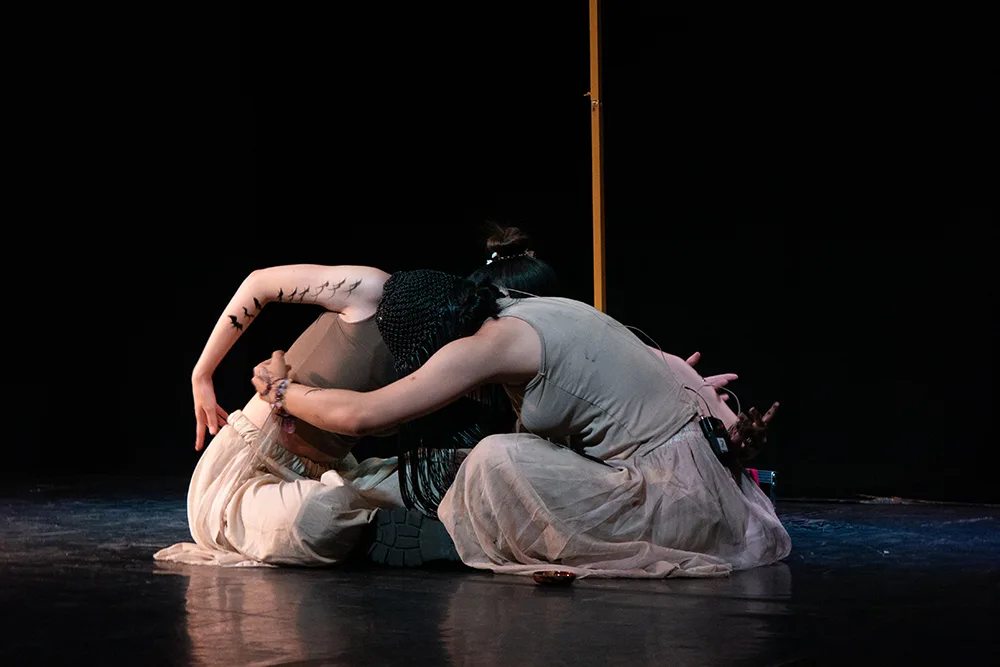
When and why did you decide to use art to explore female voices and cultural experiences?
I don’t think there was one particular moment when I decided to explore women’s voices. It developed gradually as I began to look back at my own experiences through a different lens.
Growing up, I often saw women being discouraged from certain choices or expected to be quieter, more obedient and more willing to put others first. These things felt so ordinary that I didn’t always question them. Moving to Edinburgh gave me the distance to reflect on them differently.
Meeting people from different cultures and Edinburgh’s queer community, and finding my own community from local drag scenes and artists, all gave me new ways to understand experiences I had felt but didn’t yet have the language to articulate.
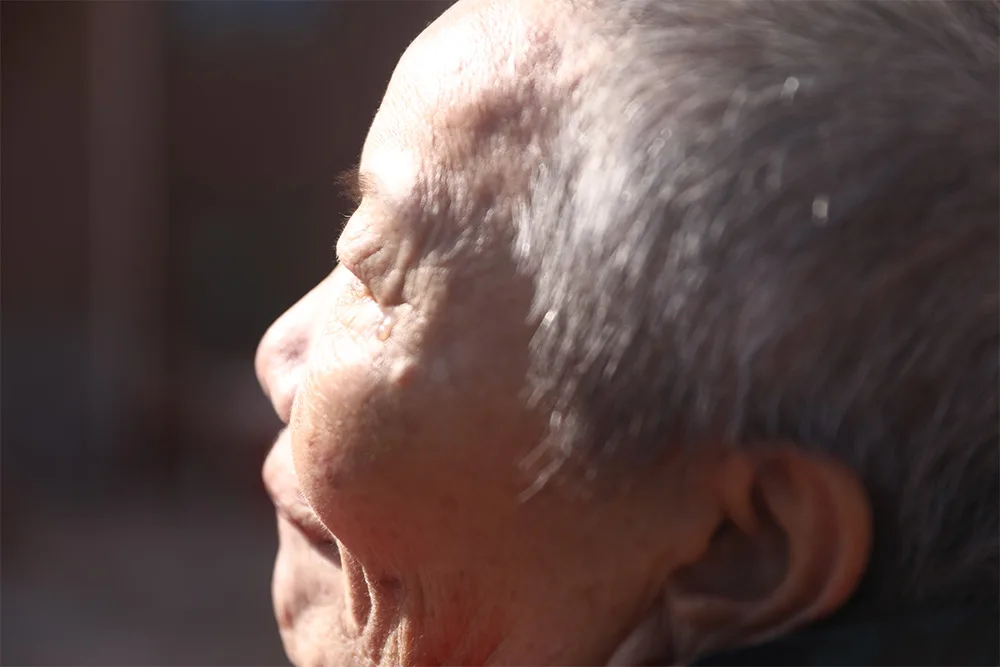
My grandmother has also deeply shaped my practice. I helped care for her as she lived with Alzheimer’s, and watching her gradually lose language and memory made me think about whose stories survive and what happens when they are never recorded.
“Meeting people from different cultures and Edinburgh’s queer community, and finding my own community from local drag scenes and artists, all gave me new ways to understand experiences I had felt but didn’t yet have the language to articulate.”
Jiayi Chen
Art became a way for me to explore those questions, not to speak for women, but to create spaces where different women’s memories, experiences and cultural knowledge can be shared and heard.
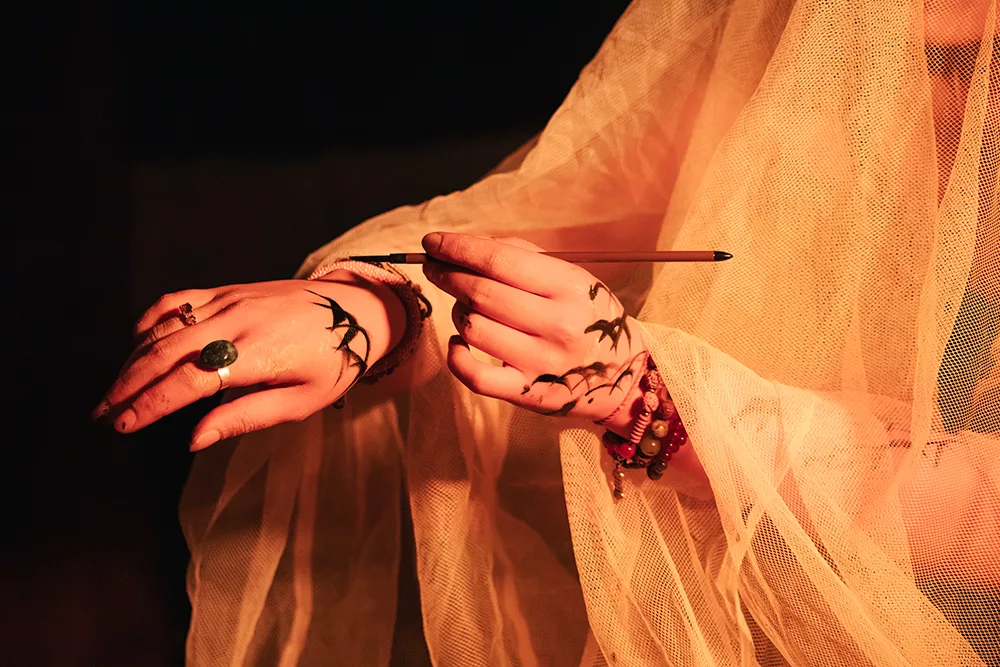
Tell us about using the world’s only known syllabic script for women, Nüshu, as part of your work.
My journey with Nüshu actually began in Edinburgh. In 2023, while studying at Edinburgh College of Art, I visited the University’s PhD Work in Progress Exhibition and encountered a female researcher using Nüshu in her artistic practice. I was immediately curious. As a Chinese woman, I found it extraordinary that I had travelled thousands of miles from home before discovering this remarkable part of my own cultural heritage.
That encounter inspired me to learn more. I later travelled to Jiangyong, where Nüshu originated, to learn from Nüshu inheritors and understand the histories and women’s lives behind the script.
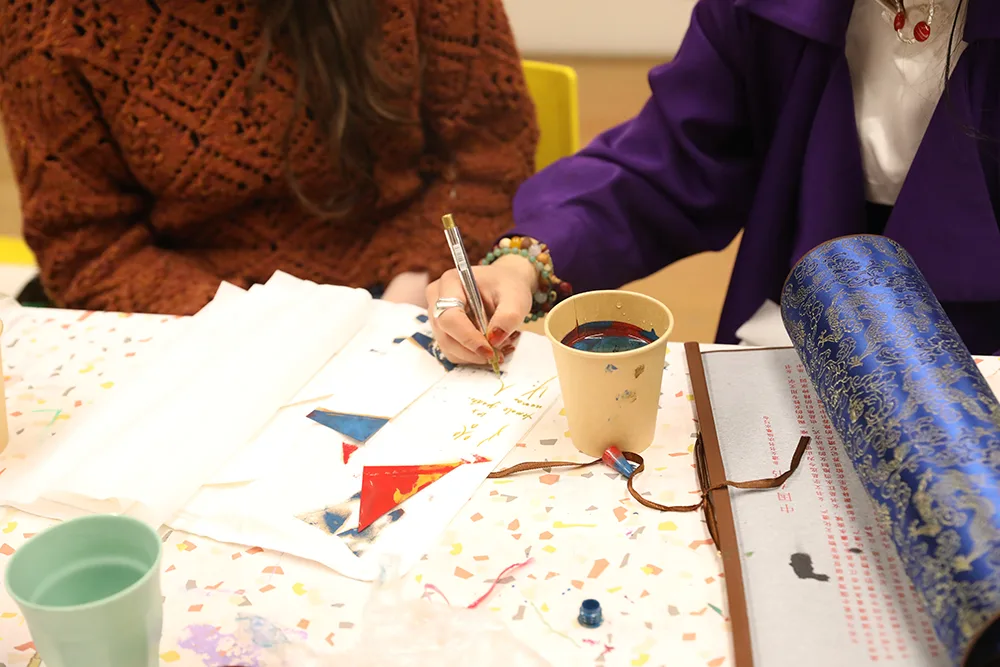
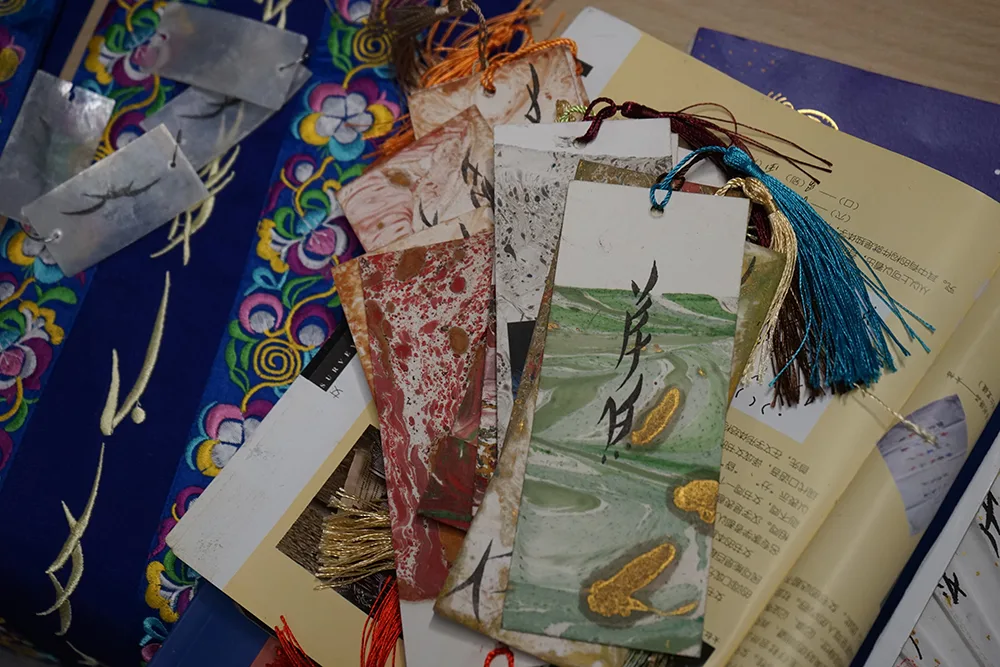
After graduating, I began experimenting with bringing Nüshu into contemporary artistic contexts. At ARC Stockton, I shared it through my first public workshop; through Bradford Producing Hub, I developed it into performance; and at Fruitmarket in Edinburgh, I combined spoken word with live Nüshu calligraphy. These experiments eventually grew into my multidisciplinary theatre work, NÜSHU: Written for Her, On Her, By Her, bringing together live calligraphy, movement, storytelling and participatory practice.
For me, Nüshu has become both a way of reconnecting with my own cultural heritage and a starting point for conversations with people from very different backgrounds.
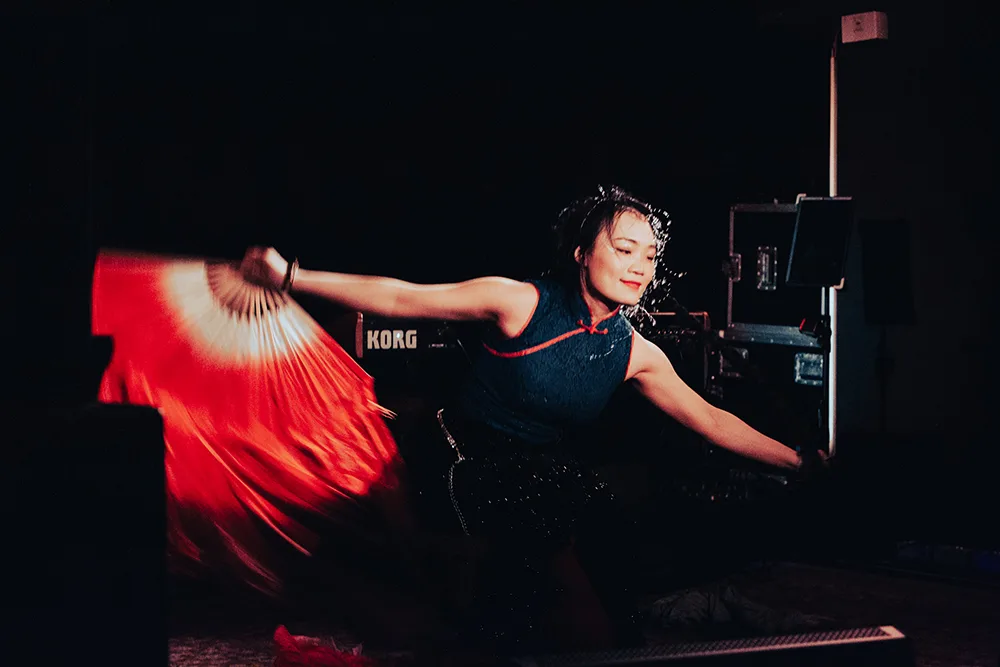
What has been your aim in using Nüshu in your creative work?
What first drew me to Nüshu was the contradiction that, as a Chinese woman, I had never heard of it until I encountered it in Edinburgh. That experience made me realise how easily women’s knowledge can disappear, not only because it is forgotten, but because it has often been excluded from the stories we are taught about our own cultures.
As I learned more about Nüshu, I became increasingly interested in the lives behind the script rather than the script itself. It represents friendship, resilience, care and the ways women created spaces for one another despite social restrictions. My aim has never been simply to preserve Nüshu as a historical artefact, but to explore how its values can continue to resonate today. Through performance and participation I hope audiences see it not as something distant, but as a living cultural practice that invites reflection, dialogue and connection.
Why is using art and live performance an important part of your storytelling about women’s experiences?
Many women’s experiences cannot be fully understood through written history alone. They exist in gestures, conversations, rituals and everyday acts of care that are often absent from archives.
My experience of caring for my grandmother during the final years of her life deeply influenced this understanding. As Alzheimer’s gradually took away her language, I realised that memory continued to exist through her body, her habits and the relationships around her. That experience changed the way I think about storytelling.
“Many women’s experiences cannot be fully understood through written history alone. They exist in gestures, conversations, rituals and everyday acts of care that are often absent from archives.”
Jiayi Chen
Live performance allows audiences to experience these forms of memory rather than simply read about them. Through movement, live writing, participation and shared presence, people become part of the work instead of remaining observers. For me, performance creates a space where empathy can emerge across cultures, generations and lived experiences.
What inspired you to set up an art community for women, The Great Her?
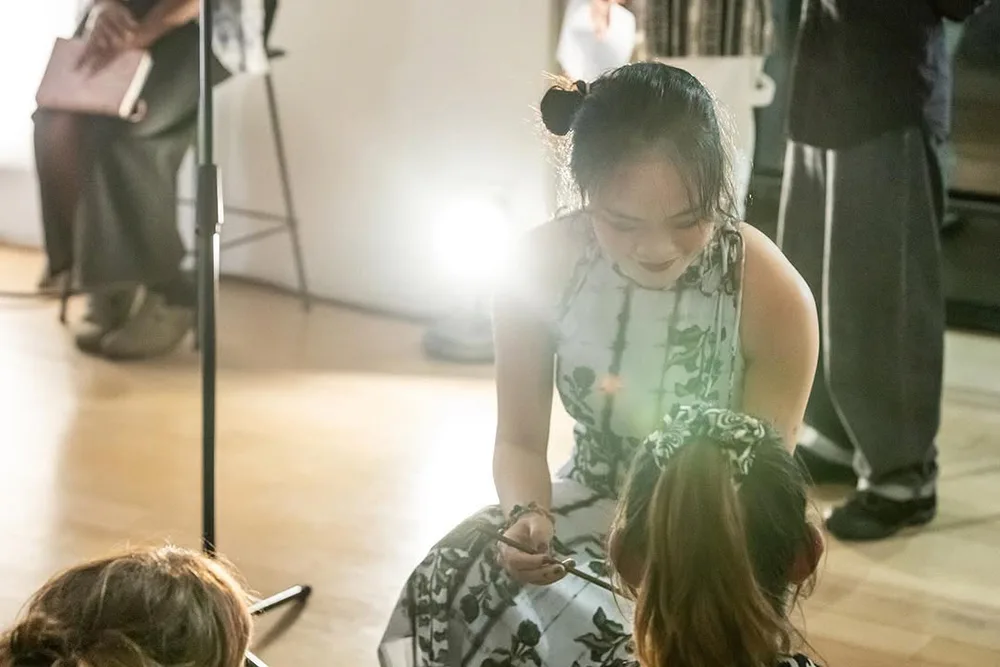
I founded The Great Her because I wanted to create the kind of community I had once been searching for myself. Females gather to encourage and help each other, make some difference to empower more.
As an East Asian artist working in the UK, I met many talented women whose work deserved greater visibility but who often lacked opportunities, networks or platforms to share it. I realised that supporting artists is not only about producing performances; it is about building relationships, encouraging collaboration and creating spaces where people feel they belong.
Today, The Great Her works across performance, exhibitions, workshops and cultural events, bringing together artists from different disciplines and backgrounds. I hope it continues to grow as a platform that celebrates underrepresented voices while encouraging meaningful collaboration across cultures.
What has been the reaction to your work?
The most meaningful impact has been seeing people recognise their own stories through my work.
Since 2023, I have led workshops and participatory projects with more than 2,800 people across the UK. Many participants arrive knowing nothing about Nüshu, yet they leave talking about their own mothers, grandmothers, languages and family histories. Those conversations remind me that although Nüshu comes from a specific place, the emotions it carries are universal.
I have also been fortunate to receive recognition through awards, reviews and opportunities, but what matters most is creating spaces where people feel seen, heard and connected.
What has been your biggest success so far?
Rather than thinking about a single achievement, I see success as building trust over time. Every performance, workshop and collaboration has expanded the community around my work.
Receiving recognition from organisations such as Creative Edinburgh, UN Women UK, the Asian Arts Awards and the National Theatre of Scotland has been deeply encouraging. However, I think my greatest success is creating work that allows people from different cultures and generations to feel connected through shared experiences of memory, care and belonging.
And your biggest challenge?
One of the greatest challenges has been navigating the arts sector as an independent international artist while remaining true to my own voice.
Working across cultures often means balancing different expectations, languages and systems. There have been times when I questioned whether my work would be understood or where it belonged. Funding and sustainability are ongoing challenges for many independent artists, but I have learned that building genuine relationships and communities is just as important as securing resources.
Those challenges have also taught me resilience. They continue to remind me that meaningful artistic practice is rarely built alone, but through collaboration, generosity and long-term commitment.
What would like to see improve in your field?
I would love to see a more inclusive cultural sector where a wider range of voices are not only represented, but also trusted to lead. Too often, artists from underrepresented communities are invited to contribute to conversations without having equal opportunities to shape them.
I hope to see greater investment in long-term relationships, community-led practice and international collaboration, creating space for different ways of making, researching and sharing knowledge. Cultural heritage should not be treated as something fixed or belonging to the past, but as something that continues to evolve through dialogue and exchange.
Are there any other artistic projects you would like to tell us about?
Alongside my performance practice, writing has become an increasingly important part of my work. Earlier this year, my poetry and short fiction were published by the Yale School of the Environment, exploring themes of memory, migration and care. I also continue to develop workshops and participatory projects with museums, galleries, universities and community organisations across the UK.
More recently, I joined an interdisciplinary summer school in Ireland exploring humanity, art and intersectionality, which has further inspired my interest in how artistic practice can create meaningful conversations across cultures.
I have created a Nüshu-themed theatre production for the Edinburgh Fringe 2026, and here we are, bringing all of our stories together.
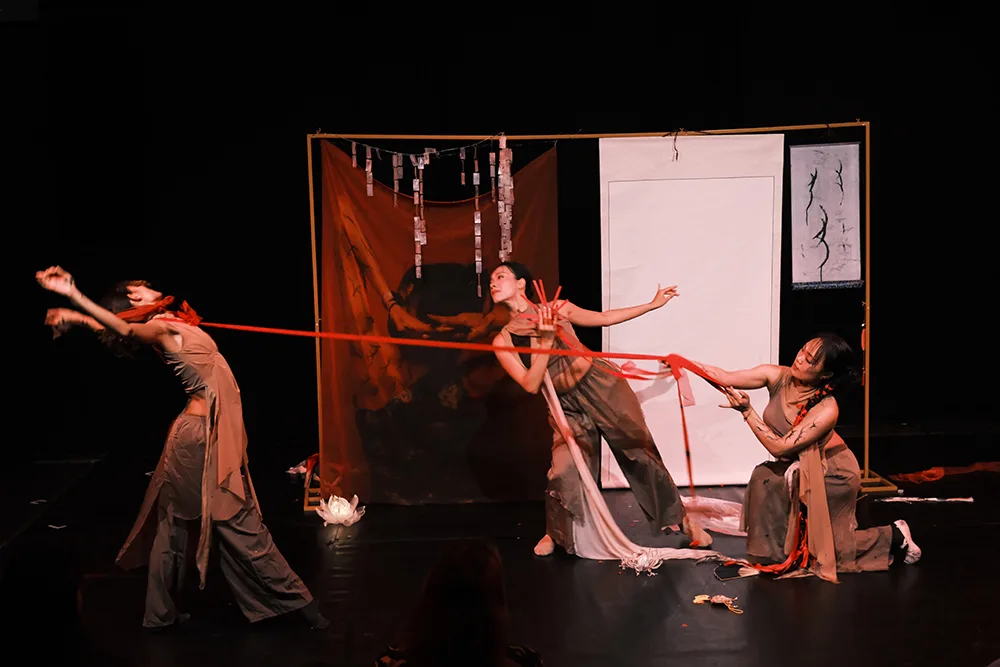
How did it feel to be nominated for the University’s Being Edinburgh Alumni Award 2026?
It was incredibly moving. As someone who came from a working-class family and was the first in my family to attend university, I never imagined that one day I would be recognised by the institution that has shaped so much of my journey.
For me, the nomination represents more than a personal achievement. It reflects the communities, collaborators, mentors and audiences who have supported me along the way. It also reminds me that the journey I began at Edinburgh is still unfolding, and that there is still so much more to learn, create and share.
“It was incredibly moving. As someone who came from a working-class family and was the first in my family to attend university, I never imagined that one day I would be recognised by the institution that has shaped so much of my journey.”
Jiayi Chen (on being nominated for the University’s Being Edinburgh Award 2026)
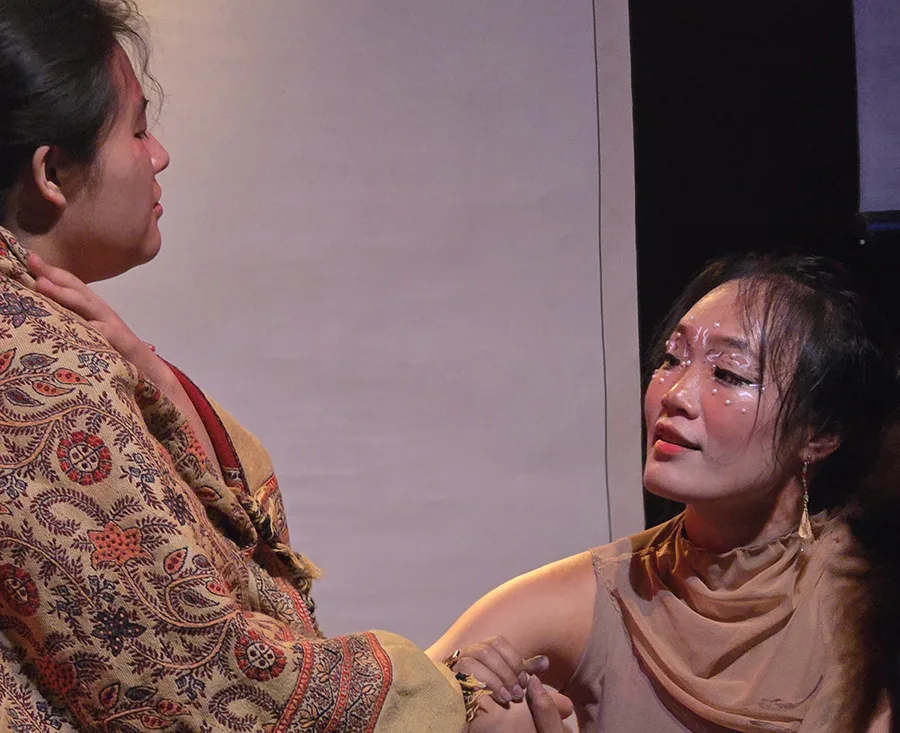
What are your plans for the future?
In the immediate future, I am continuing to develop my interdisciplinary performance practice through new collaborations, workshops and public engagement projects. I am also preparing the next stage of my research into performance, cultural heritage and embodied memory, while seeking PhD funding to continue this work in an academic setting.
I hope to keep building partnerships across the arts, higher education and community sectors, creating projects that connect people through shared stories and cultural exchange.
In the future I hope to have established a sustainable practice that moves fluidly between artistic creation, research and community engagement. I would like to complete a practice-led PhD while continuing to create ambitious interdisciplinary performances that tour internationally.
“I hope to keep building partnerships across the arts, higher education and community sectors, creating projects that connect people through shared stories and cultural exchange.”
Jiayi Chen
More importantly, I hope my work continues to create spaces where people from different cultures can meet one another with curiosity, generosity and empathy. I want to keep asking how art can help us better understand ourselves, one another and the worlds we inhabit.
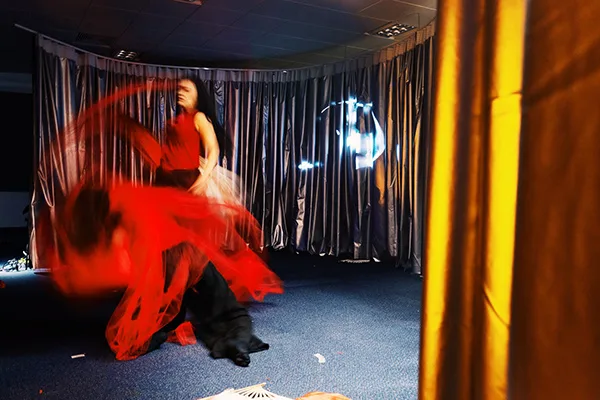
What would you say to other art students or graduates starting out on their journey?
Don’t feel pressured to have everything figured out.
No RUSH, TAKE OUR TIME. And don’t be scared.
When I arrived in Edinburgh, I didn’t know exactly what kind of artist I wanted to become. What changed my practice wasn’t finding the right answers – it was learning to ask better questions.
Stay curious. Be open to collaboration. Allow your ideas to change as you grow. Some of the most important moments in my career came from unexpected conversations, encounters and opportunities that I could never have planned.
How would you sum up your experience of being a student at the University?
The University of Edinburgh gave me the freedom to discover my own artistic language.
It challenged me to think critically, encouraged me to experiment fearlessly and introduced me to a community of people who continue to inspire my practice today.
Most importantly, it helped me realise that art is not simply about creating objects. It is about creating relationships, conversations and possibilities.
“The University of Edinburgh gave me the freedom to discover my own artistic language.”
Jiayi Chen
Looking back, I realise that coming to Edinburgh changed far more than my career. It changed the questions I ask, the communities I work with and the artist I continue to become.
I arrived hoping to study contemporary art. I left with a deeper understanding of my own cultural heritage, a community that continues to support me, and a belief that art can bring people together across cultures, generations and lived experiences.
For that, I will always be grateful.
Discover more about
Photos: Main feature image of Jiayi on stage, Jock Thomson; Jiayi Chen and Junnan Cheng performing Nüshu at the Edinburgh Fringe, Xin Wei and Samio Yuxin Zhang; close up of hand writing Nüshu script, Jules Lacave-Fontourcy; Jiayi performing on stage with a red fan, Jock Thomson; Jiayi’s grandma, Jiayi Chen; Jiayi sharing her Nüshu script skills with her audience during a performance, Chris Scott; Jiayi’s bookmark workshop at Edinburgh’s Fruitmarket Gallery, Erin Ruan Yi; Textiles, script and art materials used during workshops, Yi Craft; Jiayi Chen, Ruby Yang and Ruby Rao performing Nüshu at the Edinburgh Fringe 2026, Wenjing Xie; Jiaya and Jingwen Ni as her grandma in her Edinburgh Fringe show this year, Bhattacharya; Jiayi dancing in a red flowing dress, Victoria Vereska and Cheng Chiwai.oria Vereska; Cheng Chiwai; Samio Yuxin Zhang; Chris Scott; Erin Ruan Yi; Jack Thomson; Wenjing Xie; Tanwi Bhattacharya; Xin Wei; Jiayi Chen.