For Shirley Tian, education has never been confined to the classroom. Her experiences growing up in China, moving independently to New Zealand, and later studying in Scotland and France showed her that education is shaped as much by the society surrounding it as by what is formally taught.
“I realised from a very young age, maybe subconsciously, that what I was taught and the values I was taught at home by my parents were very different from the education I received in a public elementary school in China,” Shirley says. “The school centred around conformity, standardisation and collective responsibilities.”
When she was 12, Shirley moved to New Zealand which gave her a sense of independence at a young age.
She says: “I moved to New Zealand on my own to complete my studies in middle school and high school. It was obviously hard because it was my first time living in a foreign country. Living alone at 12 is scary, especially because I didn’t live at boarding schools. I lived with host families.
“I think who I am now makes a lot more sense when you look at how I grew up. Moving between education systems showed me that access alone does not guarantee equal opportunity.”
Advocating for young people
Shirley’s interest in education and youth development eventually led her to Shasha Network, an Edinburgh-based non-profit organisation (NGO) working to expand opportunity for young people across Africa. Shasha’s mission is to accelerate 50 million young Africans into careers of impact and dignified livelihoods by 2035.
The organisation structures its work around three interconnected areas: connectivity, capacity building and career pathways. Shasha brings high-speed internet to rural schools and helps transform them into connected community hubs; equips young people and educators with digital skills, professional capabilities and greater confidence; and connects young people with dignified local and global post-secondary opportunities.
Shirley encountered Shasha Network during her first year at Edinburgh. The NGO’s founder and CEO, Farai Munjoma, spoke at an online career event hosted by the University’s School of Social and Political Science.
“I was fascinated by Shasha’s work and found myself asking Farai question after question throughout the event,” she says. “I wanted to understand how the organisation functioned, how its wider ecosystem operated and how its different programmes connected education with longer-term opportunities for young people.”
Shirley had to leave immediately afterwards to attend a lecture. However, she followed up with an email expressing her interest in Shasha’s mission and asking whether Farai would be willing to continue the conversation over coffee.
Building dignified career pathways for African youth
At the age of 18, Shirley joined the organisation as a Learning Curriculum Designer. She contributed to the development of Bridge, Shasha’s personal and career development programme for young people aged between 16 and 24.
Shirley says: “Every weekend, I joined curriculum-design sessions with members of the team and curriculum design specialists. We developed the programme module by module. We thought about how areas such as self-leadership, personal branding and mentorship could be explored in ways that remained relevant to young people’s experiences in their local community.”
Bridge encourages participants to understand and apply these capabilities within their personal, educational and cultural contexts. Instead of positioning young people as passive recipients of knowledge, the programme creates space for them to reflect on their experiences, recognise their existing strengths and identify how they want to develop.
Shirley later became Deputy Chief of Staff as she transitioned into her second year of university. In that role, she helped to develop Shasha’s career pathways work, including its Pathways conversation series, while supporting relationships with universities and educational partners and coordinating work across an internationally distributed team. In July 2026, she progressed to Chief of Staff. Her current role combines strategic coordination, programme development, and monitoring and evaluation. Working across Shasha’s programmes and partnerships, she helps ensure that the organisation’s work remains aligned with its mission.
“A significant part of my role is keeping our work connected to the experiences of the young people our programmes are designed for,” Shirley explains. “That means looking beyond participation numbers to understand what learners find meaningful and how our programmes can continue to improve.”
Empowering young voices
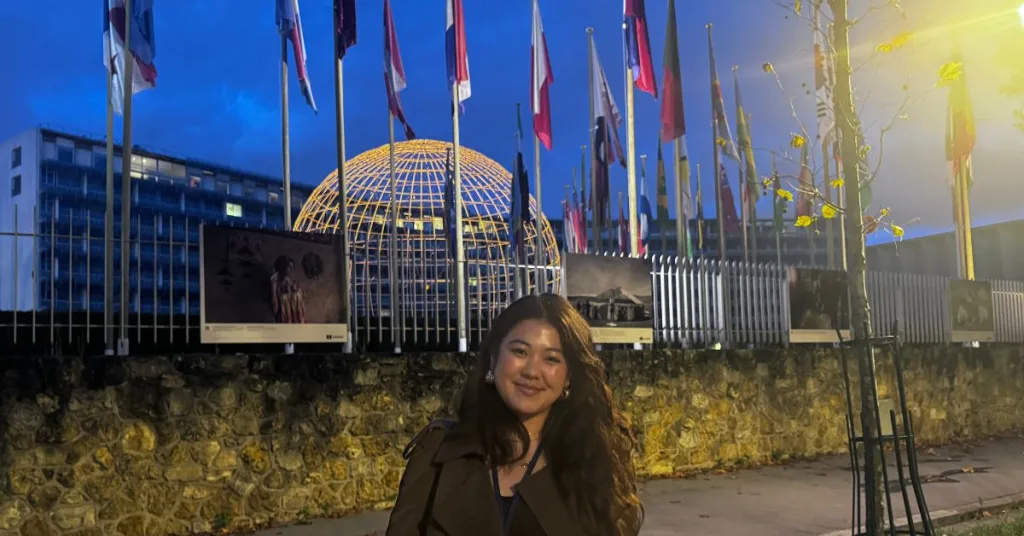
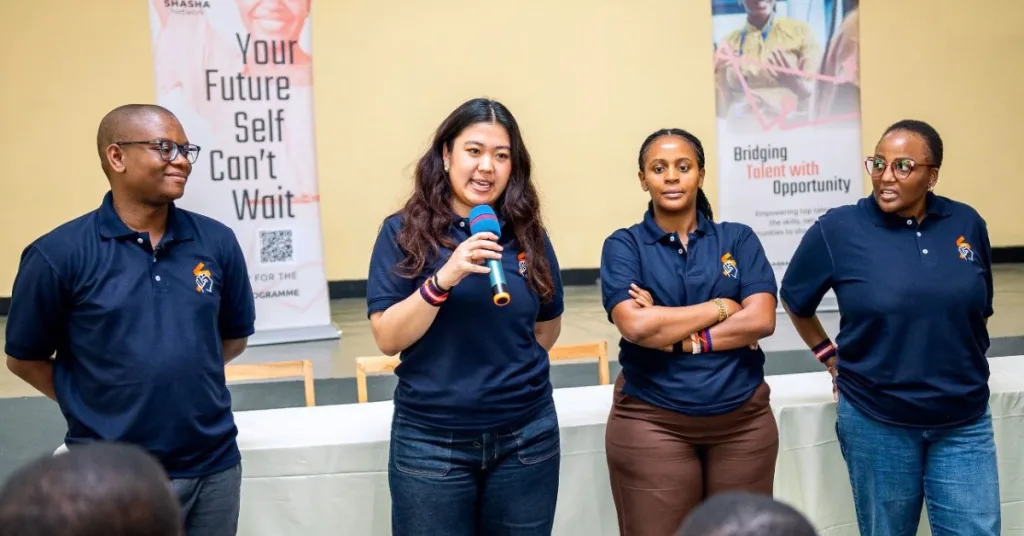
In April, Shirley attended the fifth session of the United Nations (UN) Permanent Forum on People of African Descent in Geneva as a representative of Shasha Network.
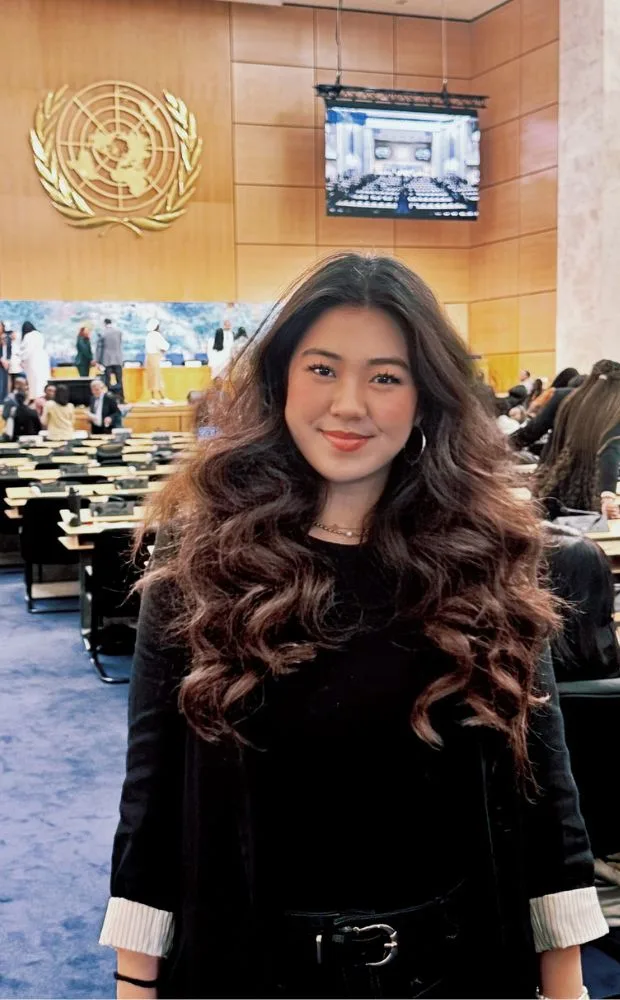
She contributed to a panel titled Youth of African Descent: Rights-holders and Agents of Change. This examined the structural inequalities young people of African descent encounter across education, employment, political participation and public institutions. The discussion also considered how states and institutions could engage young people as partners in shaping policies under the Second International Decade for People of African Descent.
Shirley was informed shortly before the panel that she would be the first civil-society speaker, following contributions from national delegations and UN agencies.
“It was unexpected,” she says. “I was conscious that I was entering a discussion alongside people with considerably more experience,” she says. “What grounded me was knowing the purpose of my contribution and being able to draw on the work I had undertaken with Shasha.”
Shirley’s speech focused on how young people should not merely be included in existing systems but recognised as rights-holders with the power to shape the systems affecting their futures. Drawing on Shasha’s Borderless Classroom and Pathways initiatives, Shirley argued that the right to education must extend beyond admission to a classroom.
Shirley says: “If we understand education as a fundamental human right, then we must also ask: a right to what? It must mean more than physical access to a classroom. Young people also need clear and reachable routes from learning into further education, meaningful work and participation in decisions about their futures.”
Barriers facing African youth
The experience led Shirley to reflect on the limits of her own perspective: “A lot of people from Africa can’t travel to Geneva because they don’t have a visa or funding. Being able to travel from Paris to Geneva placed me in a privileged position. It was important to be precise about the experiences I was drawing upon and not confuse contributing to a conversation with representing an entire community. For me, using access responsibly means remaining accountable to the work and to the people whose experiences inform it.”
Shirley’s speech at the UN emphasised that the main barrier facing many young people is not an absence of talent, ambition or agency.
“Opportunities can remain inaccessible when young people lack exposure to different careers, early work experience, trusted mentors or connections with people who have navigated similar routes,” she explains.
“Before a young person can pursue a future, they must first be able to imagine it. This is shaped by the people, communities and stories around them. Making opportunity visible therefore matters. Young people need to see not only what is possible, but also how they might realistically reach it.”
Witnessing work on the ground in Rwanda
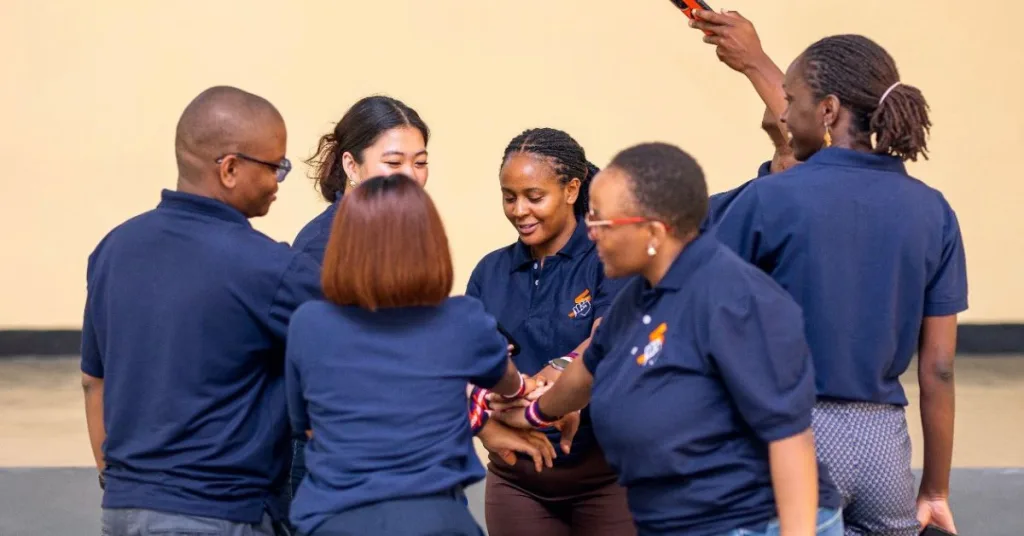
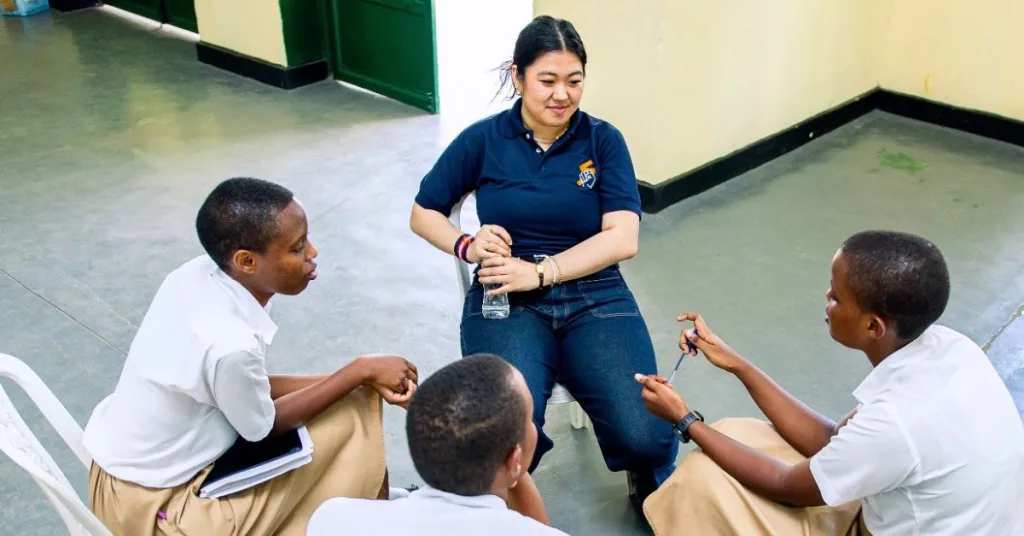
One month after the UN Forum in Geneva, Shirley travelled to Rwanda with members of the Shasha team. It was her first visit to sub-Saharan Africa. After almost three years of working with Shasha remotely, it was also her first opportunity to experience the organisation’s work in person.
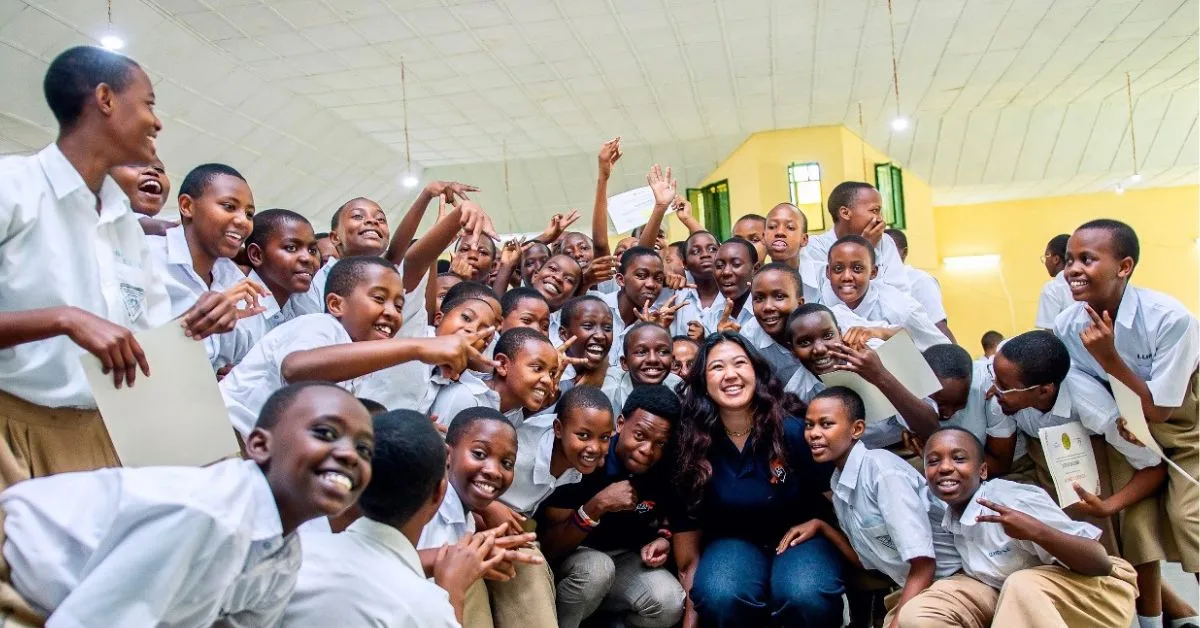
“Until then, I had primarily encountered Shasha’s mission through curriculum design, meetings, partnerships and evaluation,” Shirley says. “Visiting the school allowed me to see what that work meant in the lives and ambitions of the students themselves.”
Students who had completed Bridge spoke about aspirations to study in countries including China and France and to pursue careers in fields such as computer science and medicine. One student told Shirley that she hoped to become a doctor and conduct cancer research – something she had never seen anyone from her community do before.
Shirley says: “It felt like a full-circle moment,” Shirley says. “I was sitting with students who had completed a programme I helped design during my first year at university, listening as they described the futures they wanted to build. No official statement or report could fully reproduce that conversation.”
From this experience, Shirley learned that access to education must involve more than entering a classroom: “In Geneva, I spoke about the importance of access, agency and trust in enabling young people to build dignified futures. In Rwanda, I met young people who were already exercising that agency. They did not need anyone to give them ambition or define their aspirations. Those were already present.”
Finding a home in Edinburgh
Shirley says education has been ‘a main theme’ in her life: “Education truly transformed my life. My mom gave me private tutoring when I was really little. When I was three, she would buy me books from around the world in different languages. She also made sure that I had enough tutoring in English because it’s not my native language.”
She submitted her application to the University of Edinburgh the night before the UCAS deadline.
“I was considering universities in Canada but at the last minute I realised I liked the subjects better at Edinburgh,” Shirley says. “I really liked how they had the complementary interdisciplinary aspects to both degrees.”
She adds: “It’s hard to find a sense of belonging in a new place. It was easy in Edinburgh because it is so international and you’re able to connect across cultures. The Scottish people are also very friendly.”
Making an impact
Shirley advises her fellow students not to be tied to the idea of wanting to make an impact: “When students ask me how I found these opportunities that I have become involved in today, the honest answer is that I did not begin university knowing where everything would lead.
“I certainly did not arrive thinking that, two years later, I would be speaking at the United Nations. That opportunity grew from work I was already doing, questions I genuinely cared about and circumstances I could never have predicted.”
She adds: “If you focus too much on becoming someone who ‘makes an impact’, you can end up chasing visible positions rather than paying attention to the substance of the work.
“You can be ambitious without forcing every experience to lead towards a title. Stay curious, take your interests seriously and give yourself permission to discover who you are. Sometimes the opportunities that matter most are the ones you could never have planned.”
Looking to the future
As she prepares to enter her final year and considers postgraduate study, Shirley hopes to deepen her work on the intersection of education and international development, including through her final-year dissertation research.
She will return to Paris in September to represent Shasha Network and co-facilitate a workshop at 2026 UNESCO (United Nations Educational, Scientific and Cultural Organisation) Digital Learning Week focused on futures thinking and learning-ecosystem mapping.
“For me, facilitation is not about entering a room with all the answers,” Shirley says. “It is about creating the conditions for people with different experiences to examine a problem together and recognise connections that might otherwise remain unseen.”
Reflecting on entering professional and international spaces at a relatively young age, Shirley says: “When you enter a room with people who have worked in a field for decades, it is easy to question what you can contribute. Experience matters and being younger does not mean pretending otherwise. But remember you were also invited into the room for a reason.”
Photo credits: Shirley Tian