How fast will sea levels rise? This is a question that Lokesh Jain, a doctoral candidate in Numerical Modelling, grapples with every day in his research.
“It is perhaps the defining question of the 21st century,” Lokesh explains. “Despite being smaller than Antarctica, the Greenland ice sheet contributes more to sea level rise currently. It’s important to understand how it might evolve in the future and how this might impact coastal communities around the world.”
The Greenland ice sheet could add anywhere between one to 18 centimeters of water to global sea levels by the year 2100. Lokesh says: “While eighteen centimeters doesn’t sound like much, it is the equivalent of more water than the entire North Sea.”
Lokesh studies the mixture of icebergs and sea ice that floats in front of Greenland’s largest glaciers. The mixture, called ice melange, is the last defence against rising sea levels. As a glacier flows into the ocean, this ice melange pushes back against it and prevents ice from being lost like a cork in a bottle. If this melange melts too much or becomes too weak, the ‘cork’ pops, the glacier starts losing ice and sea levels begin to rise.
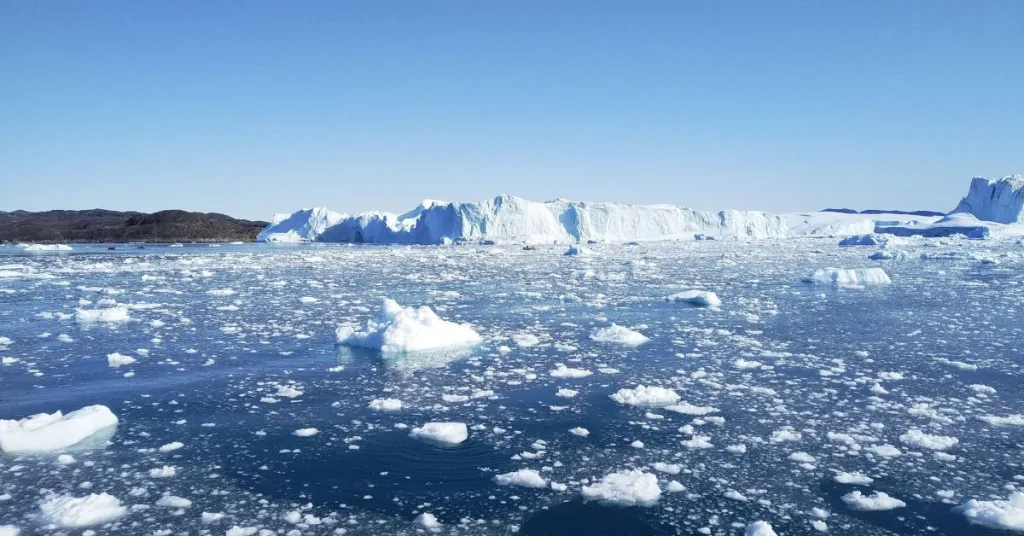
The cork in the glacial bottle
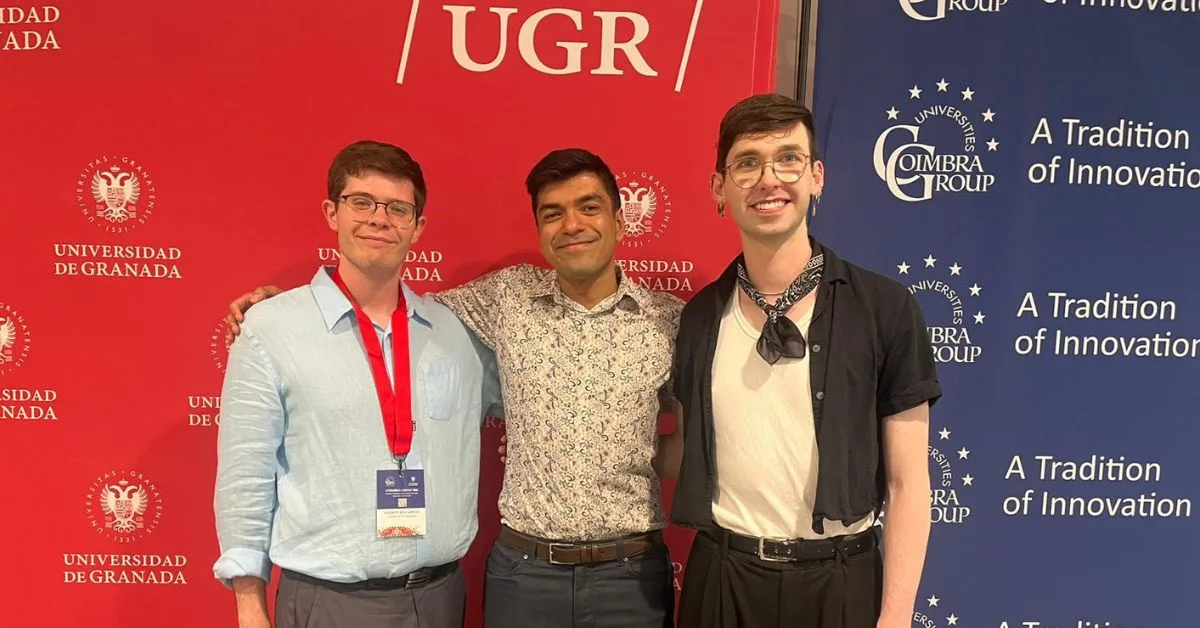
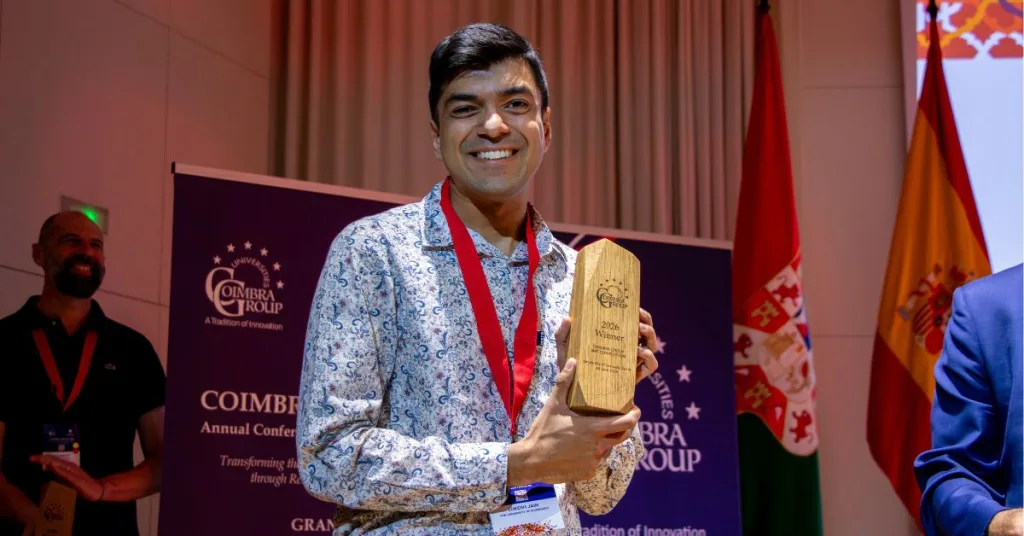
Lokesh came up with this analogy for the Coimbra Group Three Minute Thesis (3MT) competition which challenges participants from across Europe to explain their research and its societal relevance in just three minutes, using language that is accessible to a non-specialist audience.
Lokesh, whose entry was titled ‘Ice melange: the cork in the glacial bottle’, entered the competition to improve his science communication skills. He says: “I’ve always enjoyed science communication and public engagement. I find it really rewarding and fulfilling so that was a big motivator for me to enter the competition.
“I also have a good relationship with my supervisor Donald Slater, a Research Fellow in the School of GeoSciences. Back in the day he came second in the competition so I kind of wanted to beat him as well.”
Donald says: “Lokesh didn’t need a lot of encouragement and support to enter the three minute thesis competition. He’d always done a lot of science communication before he started his PhD and that was one of the things that I liked in his application.
“I think Lokesh has a natural flair for communicating. He’s good at meeting people at the level that they are at and being able to communicate at a level that really works for them. I also think he’s fantastic at taking himself out of his comfort zone and trying things out in terms of his presentation style that might feel uncomfortable to him but in the end really worked in making his presentation engaging.”
Finding how fast sea levels will rise
Lokesh uses a supercomputer to run simulations to find out how fast sea levels will rise in the future. He can predict how quickly the ice melange will melt by varying the temperature of the air or the ocean. He has developed an equation that will determine just how quickly ice will melt as temperatures rise, which other scientists can use to improve long-term climate models.
“This equation is like one little piece of the jigsaw puzzle of how climate change will affect our planet,” Lokesh says.
Lokesh advises students who want to take part in the 3MT competition that less is more: “It’s tempting to shove as many results as you can into the speech but there really isn’t time for it especially with only three minutes. You have to spend one to one and a half minutes introducing the topic, and then have time at the end for the conclusion and wider picture, so you only have about a third of the speech to focus on what you yourself have contributed.
“A really strong analogy or metaphor makes a difference when explaining your research so I settled on the idea of a cork in a bottle to explain what ice melange does. I think that really helped in communicating my message.”
Looking to the future
The concept of the 3MT competition was set up by the University of Queensland in 2008. The Coimbra Group, which is Europe’s oldest university network, set up its own version of the competition in 2017. It was an initiative of its Doctoral Studies Working Group to support the professional development of doctoral candidates across the network.
The Coimbra Group takes its name from the historic University of Coimbra in Portugal and the network fosters academic collaboration, research excellence, and influences European educational policy.
Lokesh says: “It was a surreal feeling when I found out I had won. I still don’t think it has sunk in because so many universities across Europe took part. To go from the GeoSciences round to have won at the Coimbra Group stage is an amazing feeling.”
Participants in the competition, which was held at the University of Granada, develop skills in explaining their research to non-specialists to gain experience that feeds into their ability to write funding pitches in future.
What does the future hold for Lokesh? He says he is aiming to submit his PhD by the end of August and “found a passion for science communicating” during the competition.
“After my PhD I might look for roles that focus more on that or I might stay in academia because I really enjoy the research that I do. I am still not sure what is next. The future is open.”
Image credits: Iceberg image by Christian Pfeifer and competition photos by the University of Granada