
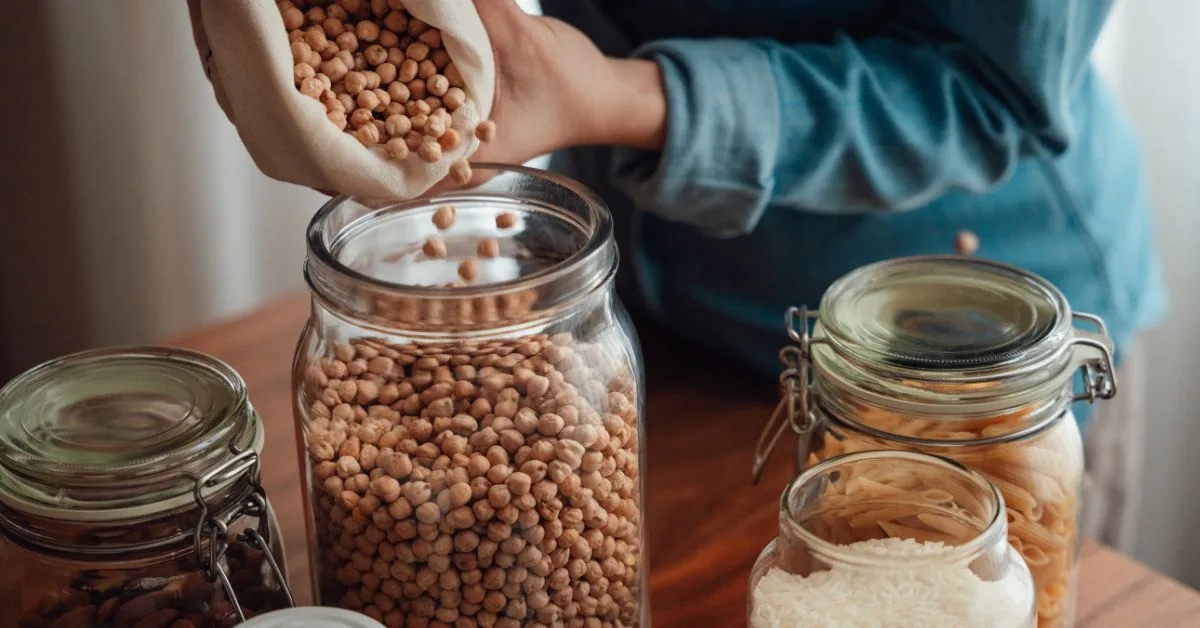
We know that what we eat affects our health but how does it affect the planet? Meat production generally uses more energy, water and land, and has higher greenhouse gas emissions than plant-based foods.
The definition of a ‘healthy diet’ by the Food and Agriculture Organization (FAO) of the United Nations and the World Health Organization 1covers health, balance, diversity and moderation. There is no doubt that existing actions on adopting a sustainable diet are insufficient. According to the 2025 edition of The State of Food Security and Nutrition in the World2, hunger continues to rise in most subregions of Africa and in Western Asia. An estimated 638 and 720 million people faced hunger in 2024. This number is projected to decrease by 2030. However, it will remain high at 512 million people, nearly 60 per cent of whom will be in Africa. It’s increasingly clear that we won’t meet the UN’s Sustainable Development Goal 2, Zero Hunger, by 2030.
Cost and affordability
Global nutrition has moved on from measuring just hunger to measuring the cost and affordability of a healthy diet. This is important because our research, in partnership with the University of Göttingen, shows that even rural subsistence-oriented and extremely poor households – those most affected by food insecurity and malnutrition – purchase most of their food3. Yet according to the FAO, 2.6 billion people could not afford a healthy diet in 20244. It’s time to act, monitor, evaluate, fail fast and scale out fast.
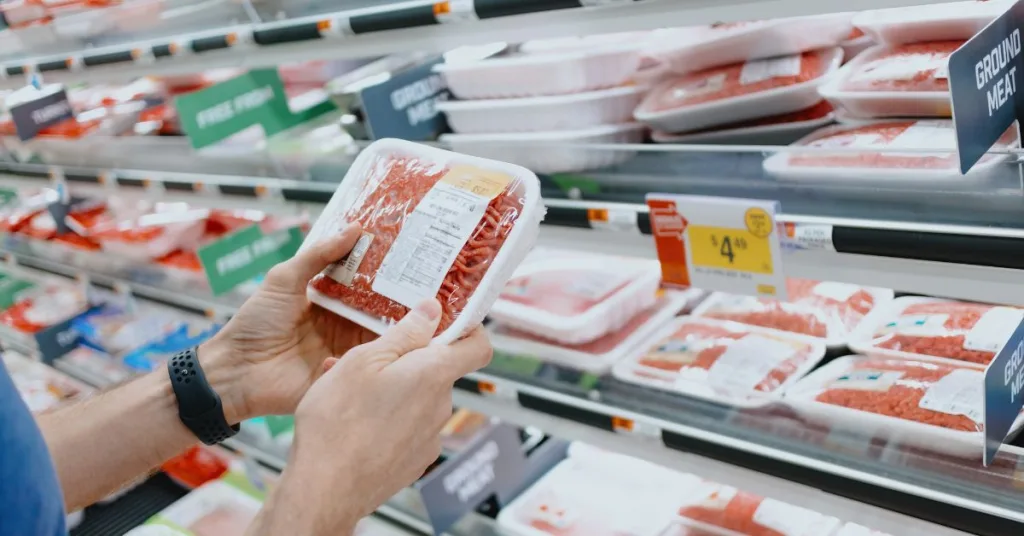
We must change what we eat and how we produce it to reduce greenhouse gas emissions. Changes will look different between countries, but when it comes to climate change, we need to focus on meat.
Between 12 and 19 per cent of total global anthropogenic greenhouse gas emissions come from livestock. Expanding livestock production is also a leading contributor to deforestation and biodiversity loss.
In countries such as the UK, we need to reduce our production and consumption of meat, particularly ruminant meat. The UK Climate Change Committee5 has recommended a 20 per cent reduction in meat and dairy by 2035, rising to a 35 per cent reduction in meat by 2050. A steeper reduction in red meat consumption is recommended (40 per cent by 2050) to reflect the higher carbon intensity of beef and lamb. To maximise the benefits of such reductions on health, the Committee recommends that meat products are replaced with plant-based foods.
Co-benefits of eating less meat
Our research 6has shown that if the Climate Change Committee recommendations are adopted in Scotland, more adults would achieve the Scottish Dietary Goals. Aditionally, greenhouse gas emissions associated with our diets would significantly decrease, getting us closer to net zero. We also found that these changes wouldn’t result in a significant change in the cost of diets. Similar reductions in other countries where meat consumption is above healthy and sustainable levels7, such as the United States, China and Brazil, could have similar co-benefits.
In other countries, such as Ethiopia, our researchers have found that meat consumption is generally low due to a variety of factors, including affordability8. Actions to promote consumption of meat and other animal-source foods in this context may therefore be beneficial for nutrition and health. Such efforts should be conducted alongside efforts to improve the efficiency and sustainability of animal-source food production in these contexts. The Centre for Tropical Livestock Genetics and Health9 and other research in the Royal (Dick) School of Veterinary Studies here at the University aims to do just that.
Occasionally, some stakeholders in the Global North claim that because their production is efficient, it should continue at current levels or even increase to support global nutrition. This is a false promise. Research has shown that high- and upper-middle-income countries primarily trade animal-source food products among themselves. Lower-middle- and low-income countries receive less than six per cent of the total trade value of animal-source foods10.
Meat and equity
Business as usual in the Global North risks worsening global inequalities. Livestock producers in low-resource contexts face some of the largest impacts of climate change but have the fewest options to adapt. Our work through the Jameel Observatory for Food Security Early Action 11explores anticipatory action in the Horn of Africa as a way of protecting livestock herders from the worst effects of drought.
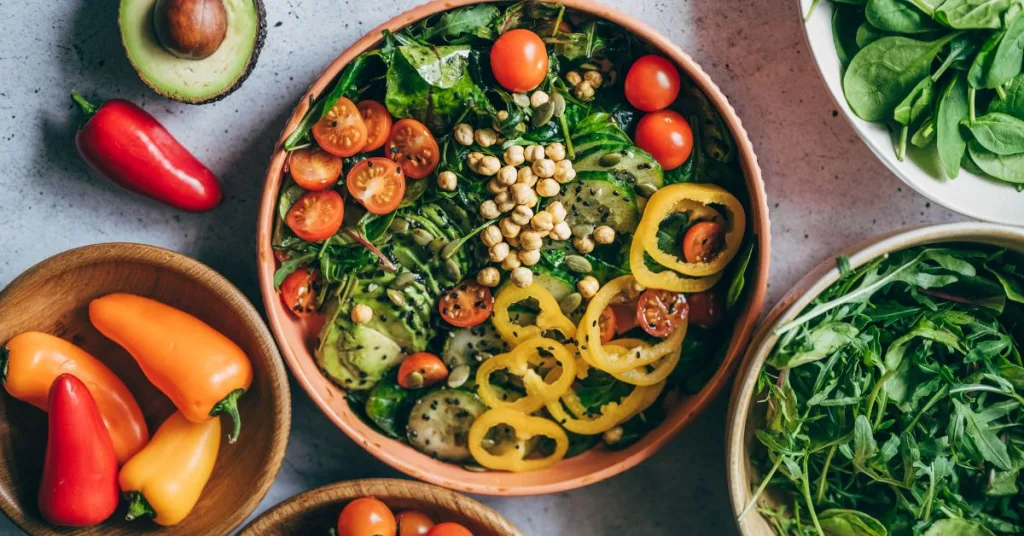
The way that we currently produce and consume food is not achieving a healthy diet for everyone today. It is jeopardising our ability to eat a healthy diet in the near future. Meat and equity need to be top of the agenda for food systems transformation.
This article was first published in COP30 Advancing Action Brochure on 10 November 2025.
Photo credits: Cobb salad by Viktoriya Skorikova; supermarket beef aisle by Grace Cary and pulses in jar by Oscar Wong
- What are healthy diets? Joint statement by the Food and Agriculture Organization of the United Nations and the World Health Organization ↩︎
- The State of Food Security and Nutrition in the World ↩︎
- Food Sourcing and Diets: Evidence from 45 Low- and Middle-Income Countries ↩︎
- The State of Food Security and Nutrition in the World ↩︎
- The Seventh Carbon Budget ↩︎
- Impact of reducing meat and dairy consumption on nutrient intake, health, cost of diets and the environment: A simulation among adults in Scotland ↩︎
- Per capita meat and fish consumption, 2022 ↩︎
- Low awareness and affordability are major drivers of low consumption of animal-source foods among children in Northern Ethiopia ↩︎
- Centre for Tropical Livestock Genetics and Health ↩︎
- National temperature neutrality, agricultural methane and climate policy: reinforcing inequality in the global food system ↩︎
- Jameel Observatory for Food Security Early Action ↩︎


