Universities exist to create and share knowledge. They encourage talent, develop leadership and build understanding across cultures and borders. They also have a responsibility in times of conflict to ensure that education continues when lives, institutions and opportunities are under threat.
Conflict disrupts learning, forces students and academics from their homes, separates colleagues and weakens the institutions that will one day be essential to rebuilding a society.
Individual universities can’t solve those challenges alone, but they can help to ensure that talented scholars can continue their education and research when it is most at risk. This belief has shaped the University of Edinburgh’s humanitarian work with students, academics and universities over many years and in particular, our support for those in Palestine.
This work has become increasingly vital as the impact of the conflict across the Middle East, particularly in Gaza and the West Bank, has deepened. At the same time, our commitment to share support has strengthened and evolved as we respond to the needs identified by our Palestinian partners.
Supporting students
In September 2025, the University worked with a network of peer institutions across the country, and the Scottish and UK Governments, to support the evacuation of two scholars from Gaza, who travelled to Scotland to start their study programmes in Edinburgh via fully funded scholarships.
The UK Government recently confirmed that its support for eligible students from Gaza wishing to study in the UK will continue during the 2026-27 academic year, and building on this, we are working with partners to welcome further students from Gaza this coming academic year.
Once in Edinburgh, we continue to work closely with applicants and scholarship holders, providing bespoke guidance throughout the process. Each student’s circumstances are different, and our aim is to ensure they receive both the practical guidance and personal support that they need before they arrive and throughout their time with us.
This commitment very importantly reaches beyond admission, and we remain in close contact with each of our students throughout their studies, ensuring that they receive the required academic, practical and pastoral support during their studies and support for transition beyond the University.
Education Beyond Borders
This work forms part of our Education Beyond Borders programme, through which the University provides scholarships and support for displaced and at-risk students and academics, both on-campus and on-line. While financial support is fundamental, students also need advice, community, wellbeing support and opportunities to thrive throughout their studies. Helping them to settle in well and succeed throughout their time here sits at the heart of our approach.
It has been encouraging to see this recognised by other organisations working directly with Palestinian students. Following the arrival of our Gazan students evacuated last year, the Gaza Scholarship Initiative and the UK Coalition for Gazan Students highlighted Edinburgh in their University Best Practice Guide.
Recognition like this reflects the huge effort from across the University and reinforces that supporting displaced students and academics requires a whole-institution approach. Through Education Beyond Borders, we have adopted an integrated model, coordinating with colleagues to bring together academic Schools, professional services and student support teams to help ensure that each scholar has the best possible experience throughout their time with us.
Alongside supporting students directly, we are working with partners to support academics and strengthen the higher education sector in Palestine itself.
Working together across the UK
The newly established UK Consortium for Palestinian Higher Education, known as UK-Pal, represents an important step in that work. Bringing together 12 universities from across the UK, alongside four sector partners, the consortium aims to develop long-term partnerships with Palestinian universities by supporting collaboration in teaching, research and institutional development, while responding to priorities identified by university partners in Palestine.
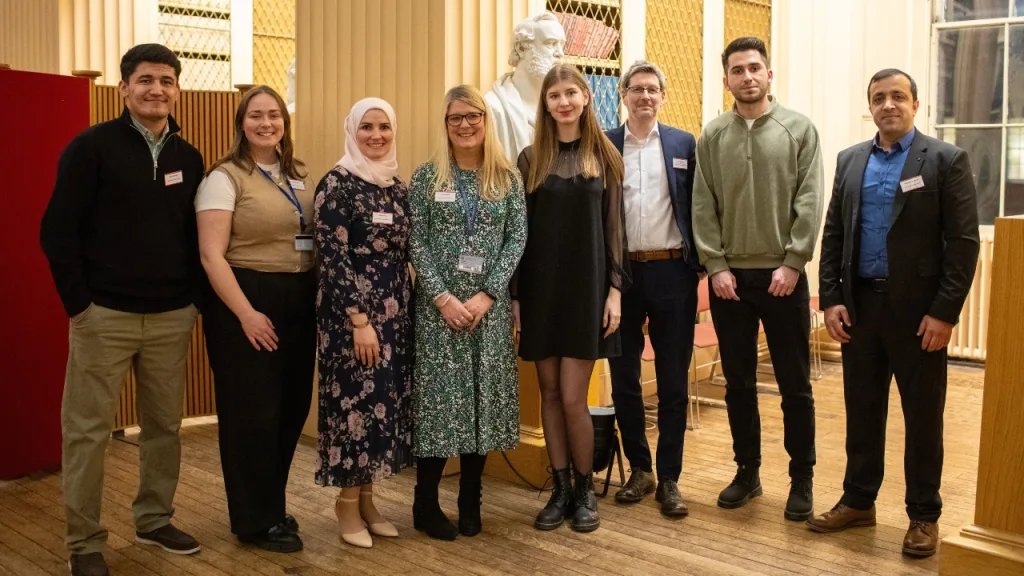
Edinburgh is the inaugural host for the UK-Pal Consortium, and I had the privilege of chairing the first meeting of the consortium’s Executive Group earlier this summer, marking the beginning of this collaborative, long-term effort.
A strength in its approach lies in its long-term outlook. Supporting individual students and academics is vital, but so too is helping to sustain the higher education institutions that will educate future generations. Universities like ours have an important role to play within this, not only in responding to immediate crises, but also in protecting and contributing to the recovery, resilience and preservation of academic communities in areas devastated by conflict.
Partners in Palestine
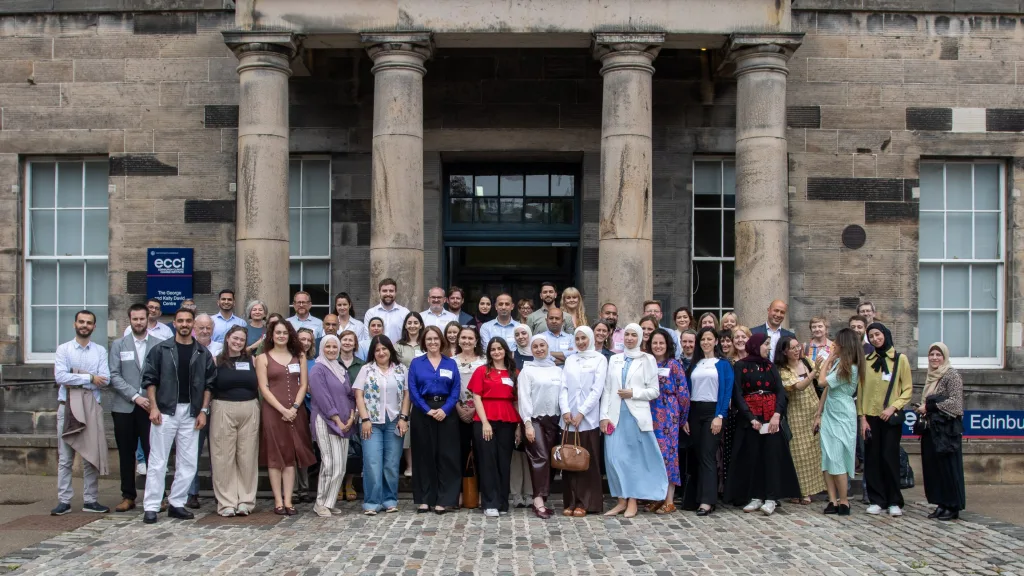
That same principle underpins our longstanding involvement in the British Council’s Higher Education Scholarships for Palestinians (HESPAL) programme, which we were proud to celebrate recently by hosting the annual HESPAL gathering in the United Kingdom, alongside programme leaders and university partners.
For more than 15 years, HESPAL has enabled Palestinian academics to undertake postgraduate study in the UK before returning home to their own institution. Now, more than ever, the initiative brings talented scholars to universities across the UK, in the knowledge that supporting leading academics today, helps sustain the future of Palestinian higher education as the sector looks to rebuild.
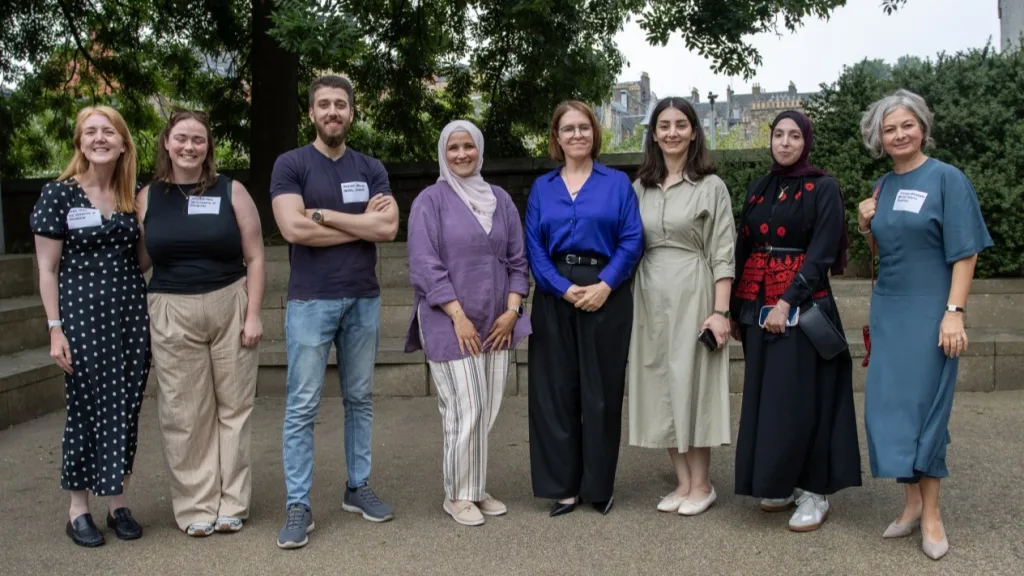
Among the scholars currently studying at Edinburgh through HESPAL is Murhaf Abdelhadi, who trained as a doctor in Gaza and worked at Al-Quds University before beginning a postgraduate master’s degree in Anatomy. His commitment to continuing his academic development despite immense challenges reflects the determination shown by so many Palestinian scholars.
Listening to Murhaf speak about his experience reminds me why programmes like HESPAL matter. He describes the scholarship as a turning point in his life, opening learning and development opportunities that simply would not have been possible otherwise. Arriving in Edinburgh was understandably daunting but hearing him describe our University community as his ‘second family’ brings home the importance of supporting scholars beyond providing a place to study.
Following this year’s HESPAL annual gathering, I received messages from Palestinian academics studying at universities across the UK. It served as reminder that universities are about much more than qualifications or research. They preserve relationships, create opportunities for collaboration and provide spaces where people can reconnect, support one another and look towards the future together.
Academic achievements
An academic whose experience illustrates the opportunities that international partnerships can create and the profound personal challenges that often accompany them is Amani Ahmed.
Amani worked for more than 20 years at the Islamic University of Gaza, where she founded the University’s International Relations Department.
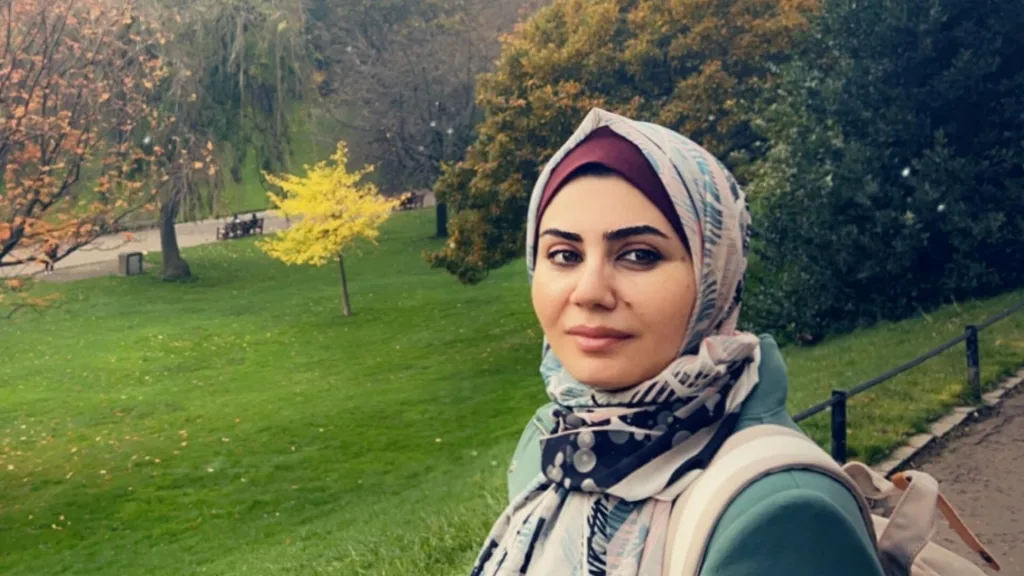
Image Amani Ahmed / Cara.
She came to Edinburgh in 2022 to begin her PhD through a scholarship from the University’s Business School. However, in 2023, the conflict in Gaza began while she was here, leaving her separated from her family.
Through our long-standing partnership with the Council for At-Risk Academics (Cara) we were able to support both Amani’s continued research in Edinburgh and the relocation of her immediate family to Edinburgh, allowing them to reunite safely.
Her experience demonstrates that supporting at-risk academics extends beyond protecting individual careers by enabling talented scholars to continue contributing to their fields while maintaining vital connections with their communities and institutions.
Her determination to continue her research and to contribute to the future of higher education in Palestine perfectly illustrates the purpose of our partnerships with organisations like Cara.
Looking ahead
Sadly, the challenges facing higher education in Palestine remain profound and will not be resolved quickly. But universities have always demonstrated that international collaboration can endure even in the most difficult circumstances.
By supporting students, investing in academics and working in genuine partnership with our colleagues in Palestine, we can help ensure that education can continue despite ongoing conflict and that the expertise needed for future recovery is not lost.
That is the role we believe universities can play, and it is one the University of Edinburgh remains committed to fulfilling alongside our colleagues, students and partners in Palestine.