

In the UK, a Cadbury Dairy Milk “family” bar has shrunk from 200g to 180g since 20211. In the same period, the price has risen from £1.86 to about £2.75, a price increase of around 65% once you account for the smaller size. Over the same period, overall consumer prices have risen by around 21%2.
Much of the media coverage of these changes points in the same direction: higher cocoa prices, often linked to climate change and disease-damaging cocoa harvests, particularly in West Africa. One recent article about Maltesers (made by Mars)3 described increases as the “direct result” of wholesale cocoa prices.
Cocoa prices have indeed risen sharply in recent years. But on their own, they do not fully explain why the prices of chocolate products have risen so much, nor why they remain high even as cocoa prices have eased from their peak.

Are international cocoa prices behind the rising cost of chocolate?
Before the recent spike, international cocoa prices had been trading for several years at around 2,400 US dollars to 2,600 US dollars 4(£1,800-£1,950) per tonne. But by spring 2024, they had quadrupled, briefly trading above US$10,000 per tonne in December 2024 and January 2025. This reflected poor harvests, plant disease, and heavy rains and heat in major producing countries such as Côte d’Ivoire and Ghana.
Since that peak, cocoa prices have fallen by nearly half and are now twice their pre-spike level at around US$6,000 per tonne. This reflects expectations of better supply, as weather conditions improve in West Africa and new plantings in Ecuador reach maturity.
Wholesale prices for sugar5 and whole milk powder6 also rose after 2021, though by smaller multiples than cocoa, and have since eased from their recent highs.
But the price of a chocolate bar at the checkout reflects more than its ingredients. It includes processing, packaging, energy, transport, staff costs, marketing and the profit margins of both manufacturer and retailer.
Analysis by the UK’s Competition and Markets Authority of food and grocery manufacturers’ costs shows that, for many processed foods, ingredients are less than half of the production costs, with further costs added along the supply chain.
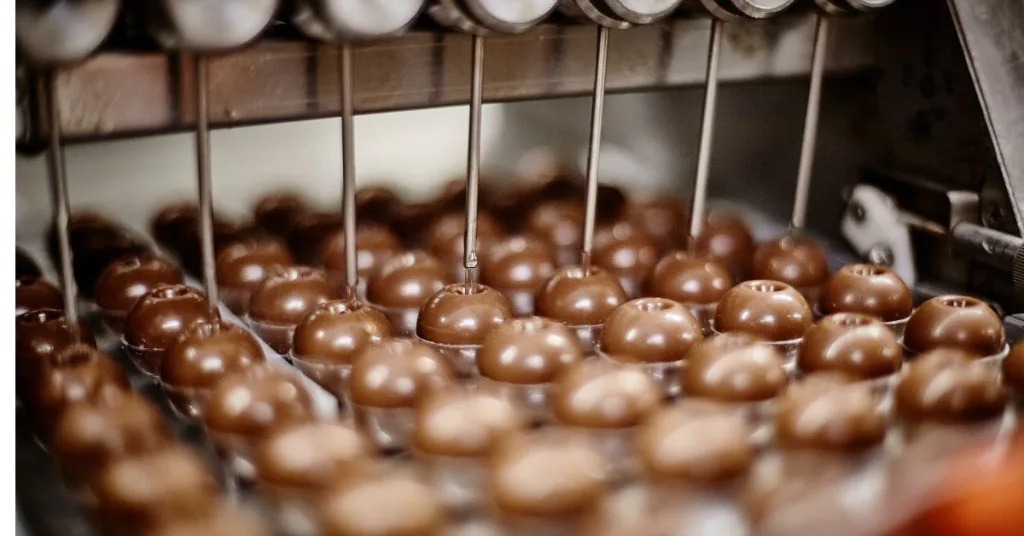
What happened to Dairy Milk?
To show how changes in ingredient costs compare with prices for consumers, my price calculations focus on a single example: Cadbury Dairy Milk, the UK’s favourite chocolate brand7.
By combining international wholesale prices for cocoa, sugar 8and whole milk powder 9with a simplified recipe (based on Dairy Milk’s minimum cocoa and milk‑solids percentages of 20% and 23%, with sugar making up the remainder), I estimated the cost per 100g of milk chocolate of these key high‑cost ingredients. It rose from around 10p-15p in late 2021 to 20p-30p at the peak.
In December 2021, a 200g Dairy Milk family bar in a large supermarket cost about £1.86 – roughly 93p per 100g of chocolate. By late 2025, the standard family bar was 180g and typically cost around £2.75, about £1.53 per 100g. This is a rise of 60p per 100g, or about 65%.
The increase in retail chocolate prices until early 2024 was around half the rise in wholesale ingredient costs. But after that, further hikes in retail prices were much less clearly justified by ingredient costs alone. Even at their highest point, ingredients added only about 10p-15p per 100g relative to 2021 – yet by late 2025, the retail price per 100g was about 60p higher than in 2021.
The aspect of this increase not explained by ingredients reflects other costs and choices, including higher energy and packaging costs, higher wages, and decisions by manufacturers and retailers about margins and pack sizes.
One of these choices is “shrinkflation”: keeping the price broadly similar while reducing the size of bars and tubs, as with Dairy Milk’s move from 200g to 180g. This size reduction alone contributes roughly a quarter of the increase in the price per gram of chocolate.
The rising cost of chocolate manufacturing
Cocoa prices have since fallen by about half from their peak, and wholesale sugar and whole milk powder prices have also eased. But Dairy Milk has not become cheaper, nor has the family bar’s size increased back to 200g.
Of course, Cadbury is not the only company to do this. And while the price rises over the past 18 months cannot be explained by wholesale ingredient costs, Mondelez, Cadbury’s owner, reports that its gross profit margin fell from around 40% a year earlier to about 30% in the latest quarter10, even as it raised prices.
Mondelez previously said11 its chocolates continued to be “much more expensive to make” and so it had slightly reduced the weight and increased the list price of some products. There is no suggestion that the company is misleading the public on the reason for price rises.
Record cocoa prices are real, and they have clearly pushed up the cost of making chocolate. And cocoa production in future may again be hit by climate, disease or other shocks, leading to fresh spikes in ingredient prices.
But other pressures and pricing choices have also contributed to how much consumers must now pay for their favourite chocolate – and how sticky those higher prices have proved to be.
This article was first published in The Conversation on December 22 2025.
Image credits: Close-up of chocolate cake on plate by Sandu Preda; close-up of luxurious chocolates by Catherine Falls Commercial; machine filling chocolate confectionery with liquid by Oliver Rossi and close up of chocolate pieces stack by Huizeng Hu
- Why your chocolate is getting smaller, more expensive and less chocolatey ↩︎
- Consumer price inflation, UK: November 2025 ↩︎
- Maltesers now more expensive by gram than STEAK as cocoa shortage sparks record price rises ↩︎
- Commodity Markets ↩︎
- Commodity Markets ↩︎
- Food Price Monitoring and Analysis Tool ↩︎
- The UK’s 10 favourite chocolate brands 2024 ↩︎
- Commodity Markets ↩︎
- Food Price and Monitoring Analysis Tool ↩︎
- Mondelez International Reports Q3 2025 Results ↩︎
- Why your chocolate is getting smaller, more expensive and less chocolatey ↩︎


