
Many of the factors that support collective climate action can also maximise potential for positive impact from innovation. On World Creativity and Innovation Day, this article reflects on the role of innovation in enabling climate action and three factors that can enhance the impact it has on the action agenda.
What is innovation and why does it matter?
We must aim to accelerate the adoption and scaling of climate solutions.
Innovation – the process of adoption and use of new knowledge and ideas – facilitates this agenda by providing mechanisms and incentives to develop and deploy solutions in the transition to a low-carbon economy. In doing so, innovation can build resilience of individuals, organisations, cities and nations to climate change, and increase capacity for climate action in different areas of society, as part of a just transition.
Innovation encompasses many different activities, stakeholders and pathways to impact. At Edinburgh Innovations – the University’s commercialisation service – we transform academic knowledge and ideas into new technologies, products and services for societal impact. Working across priority themes and sectors, such as biodiversity, circular economy, and clean energy, we support our academics and industry partners to drive innovation in a variety of ways. This includes licensing, company formation, business acceleration and investments.
One University spinout, SeaWarm1, is a great illustration of the positive commercial outcomes and societal benefits that can flow from such activities. With investment secured to roll out its renewable heating system across Scotland’s communities, SeaWarm’s modular, low-cost, heat exchanger technology harnesses natural warmth from water to deliver affordable, sustainable heating and cooling. By replacing oil and gas systems, the company could cut CO₂ emissions by up to 90 per cent, while also reducing energy bills for households and businesses. While Scotland’s coastal communities are an immediate focus for SeaWarm, it aims to expand into national and international markets as it seeks to play its part in the global clean energy transition.
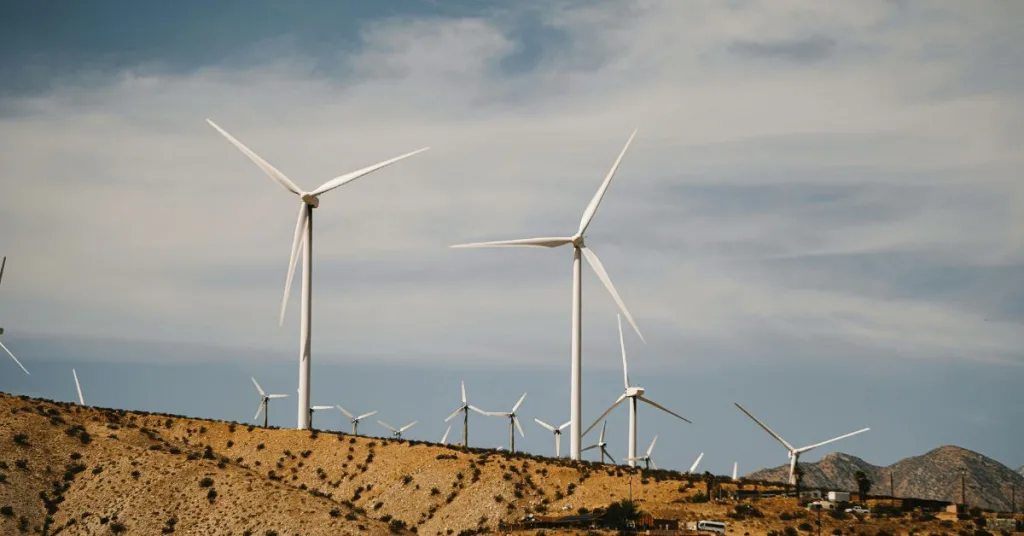
Initiatives tackling climate action
If innovation is a key enabler of climate action, what aspects increase the potential pace and scale of change that is demanded by the environmental polycrisis? We consider three inter-related elements of cross-boundary collaboration, synergistic working and systems thinking.
Firstly, there is a need to recognise and promote the collaborative nature of innovation processes. They require many actors with different skills and experiences, who work together across functional boundaries, to create the right conditions for new solutions to be validated and grow.
COP 30 was an opportunity to spark new connections leading to action that is founded upon cross-boundary collaboration. There was a risk, however, that competing views and negative perceptions between actors undermines efforts to build productive collaborations.
How universities can help
Universities and others can help avoid vital ground being lost by championing successful models of cross-boundary collaboration – such as the University’s Edinburgh Futures Institute2 – as a means of bringing different perspectives together to challenge convention and drive innovation for a better future. Building on this, synergistic working can accelerate innovation by leveraging skills, experiences and perspectives of partners and collaborators.
Founded on a mutual desire to deliver positive impact through research, education and business innovation, the University’s partnership with NatWest Group is a good example of synergy within an academic-industry partnership. The longstanding partnership with NatWest includes, among other initiatives, an award-winning Climate Education Programme3 that has equipped thousands of bank employees with the knowledge and skills needed to manage climate risk and support clients to engage with the net zero transition.
Lastly, as this year’s COP President highlighted, systems-thinking is key to realising transformative change through innovation. It is necessary because of the complex, interconnected nature of ecosystems in which new solutions are implemented and scaled. Systems-thinking provides insights that help to overcome blockages, unlock co-benefits, and avoid blinkered approaches that fail to capture the full value that innovation creates in complex systems.
The University’s new Centre for Net Zero High Density Buildings4 is a case in point. An initiative that aims to significantly reduce carbon emissions from densely packed buildings in UK cities and towns, the Centre draws industry, education, public sector and the community together. This dynamic partnership will improve the energy efficiency of ‘hard to treat’ buildings, while delivering co-benefits for households on lower incomes, and opportunities to bring new sustainable construction products to market.
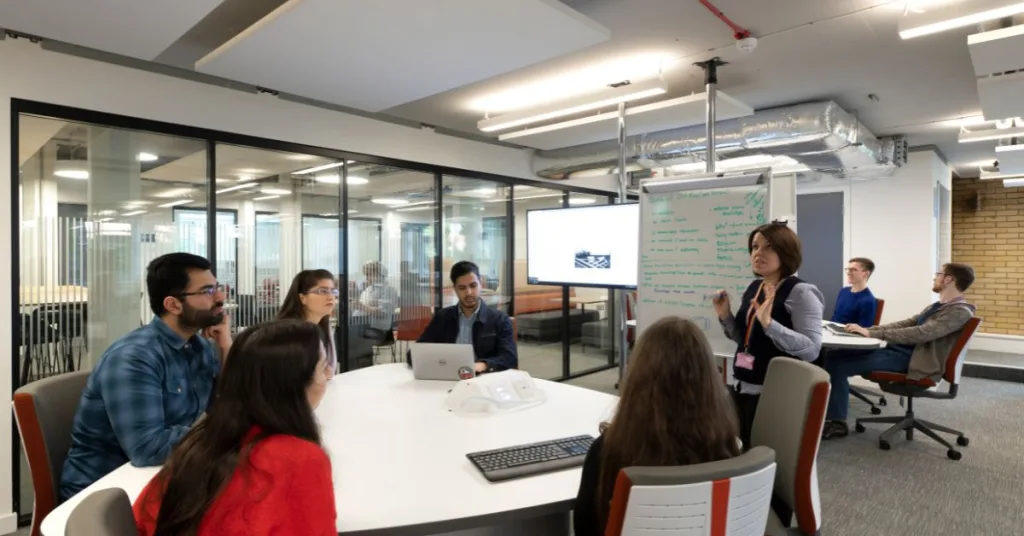
What else?
If COP 30 was about giving rise to additional support and opportunities for the adoption and scaling of climate solutions – what more can be done to achieve a step-change? In 2023/24, Edinburgh Innovations supported £19.4 million of industrial and translational research awards; £32.4 million of investment into associated companies; and the creation of 18 startups and spinouts, that focused on addressing climate change and other environmental challenges.
These metrics indicate the scale of impact we have, and we intend to go further and faster by doubling innovation outputs by 2030 and continuing to find new ways to unlock the power of academic research through commercialisation.
This includes the new Regen Innovation Catalyst Proof of Concept Fund5 we are piloting as a means of further supporting innovators and entrepreneurs to progress the commercial readiness of promising climate technologies and other solutions.
We are also continuing to develop the knowledge, skills and behaviours of academic staff engaged in innovation, through an Innovation Competency Framework6, to enhance positive outcomes from innovation.
Finally, the University is encouraging its researchers to think holistically about climate action, by supporting them to address priorities in the UK Concordat for Environmental Sustainability of Research and Innovation Practice7, which include harnessing the power of collaboration and partnerships to extend the scale and reach of climate action from research and innovation.
We are committed to accelerating climate action through the commercialisation of innovative knowledge and ideas, alongside policy engagement and other pathways to impact. In tandem, we must always be open to innovation ourselves so we can make more of those ideas work better for a sustainable future.
Find out more
Image credits: Students at King’s Buildings by Whitedog Photography; windmills by Kindel Media and students at table by Paul Zanre
- SeaWarm ↩︎
- Edinburgh Futures Institute ↩︎
- NatWest Group partnership for climate education ↩︎
- Centre to accelerate net-zero buildings for cities ↩︎
- Regen Innovation Catalyst Proof of Concept Fund ↩︎
- Innovation Competency Framework ↩︎
- Concordat for the Environmental Sustainability of Research and Innovation Practice ↩︎