
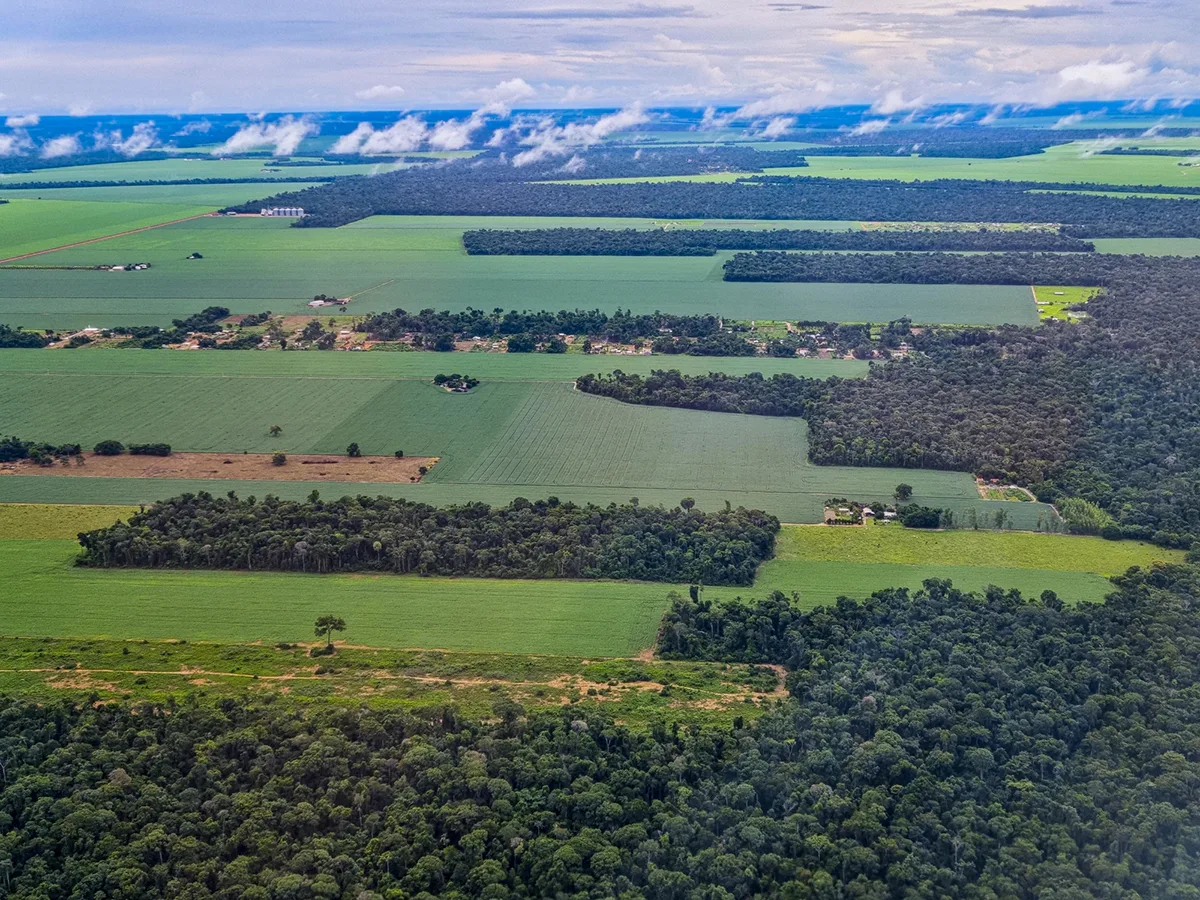
The climate and biodiversity crises are tightly linked. Land‑based climate measures such as reforestation and bioenergy, including Bioenergy with Carbon Capture and Storage (BECCS) will require large areas of land to meet climate targets. That extra demand increases competition for land. It can damage habitats through land‑use change, displacing agriculture and timber production, and causing knock‑on deforestation. These changes can raise food prices and drive further biodiversity loss. To deliver climate- and biodiversity-positive action, we need to consider wider outcomes than greenhouse gases alone and recognise the different ways people value nature, so choices are fair and workable.
Assessing these outcomes together, and the different values people hold, clarifies the trade‑offs and points to practical steps. Shifting towards more plant‑based diets where consumption is high, protecting key ecosystems, and restoring degraded land. To support a just and workable transition, further research is needed on values‑based, target‑seeking scenarios and modelling that captures human–nature feedbacks, variability and shocks, and how policy, markets and trade respond across scales. Coupled socio‑ecological models that link demand, land use, biodiversity and institutions can be used to stress-test options and identify robust choices. Work at the University of Edinburgh addresses these gaps by advancing such modelling and values‑based scenario tools.
Why looking beyond carbon matters
Land-based mitigation options play a major role in Paris consistent pathways. However, the scale of land required is considerable. Many such pathways expand bioenergy crops and new forests by hundreds of millions of hectares by the mid- to late century. National net-zero pledges have about one billion hectares for land-based Carbon Dioxide Removal (CDR). This is comparable to today’s global cropland of ~1.56 billion hectares. This implies roughly 35–40 million hectares converted or restored each year to 2050. This includes around 13 million hectares per year for reforestation (Dooley et al., 20241). Within two degrees Celcius or lower pathways, the median expansion rate of bioenergy crops for BECCS is about 8.8 million hectares per year (Perkins et al., 20232).
Over recent decades, the fastest observed cropland expansion has been soy. This increased by around 1.7–1.8 million hectares per year between 1961 and 2021. The implied BECCS rate is therefore more than three times that pace, making the required land use change unprecedented in speed and scale (Perkins et al., 20233). For total land‑based mitigation, it would be higher still. At such rates, the pressure on habitats, freshwater and food systems would be severe. There would be significant risks of displaced land-use change, loss of culturally important landscapes and rising food prices. In our study, we also showed that environmental, sociocultural and institutional constraints mean the deliverable potential of land-based CDR is much lower than technical or economic estimates suggest (Perkins et al., 20234). As a result, it is essential to plan for more than carbon and to judge options against biodiversity, freshwater, food and social outcomes.
Desirable futures and plurality of values
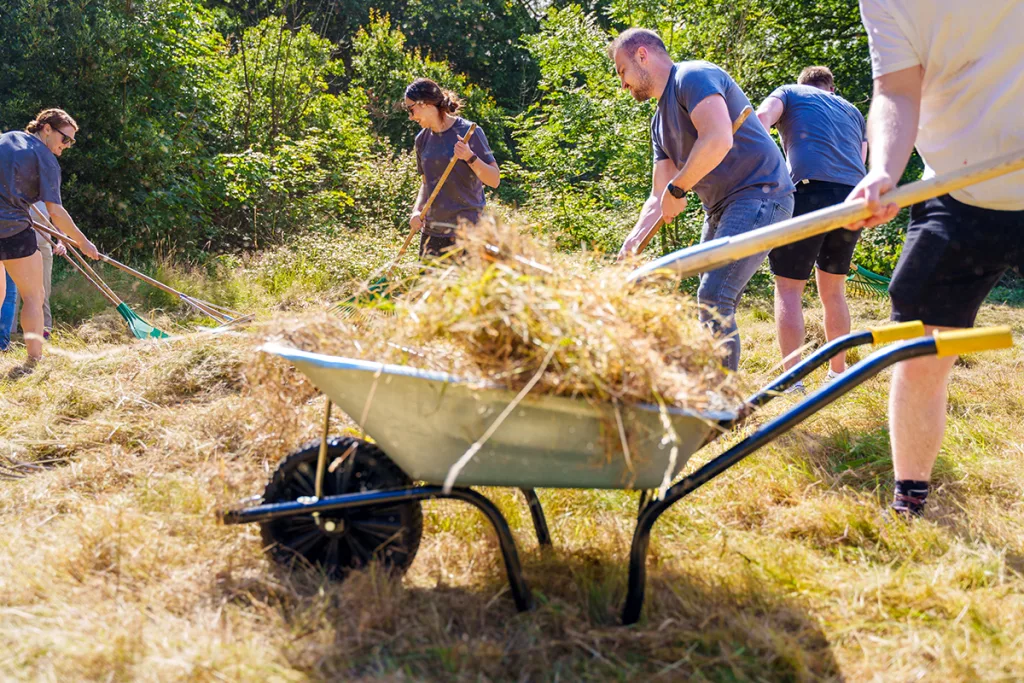
The trade offs, for example between climate mitigation, biodiversity, and food, cannot be reduced to a single metric. Policy and planning should reflect multiple perspectives and values. Target seeking (normative) scenarios are needed to define desirable futures that account for these different perspectives. The Shared Socioeconomic Pathways (SSPs) and Representative Concentration Pathways (RCPs) are the main scenario tools used in climate analysis and by the IPCC. Shared Socioeconomic Pathways describe alternative socioeconomic futures. Representative Concentration Pathways describe greenhouse gas concentration and warming levels. Used together, they explore plausible futures and focus on climate outcomes. They do not aim to specify what a desirable future for nature looks like, and give limited insight into biodiversity, freshwater or cultural landscapes.
The Nature Futures Framework (NFF) was developed by IPBES to address these gaps. It provides a nature-centred, values-based set of desirable futures, organised around three perspectives. These are:
- nature for nature (protecting species and intact habitats);
- nature for society (the benefits people rely on, such as food, water and climate regulation); and
- nature as culture (people’s ties to nature through identity, place and stewardship).
Used alongside Shared Socioeconomic Pathways and Representative Concentration Pathways, the Nature Futures Framework helps make co-benefits and trade-offs explicit beyond carbon. It translates targets into credible pathways.
Assessing SSP–RCP pathways with Nature Futures indicators
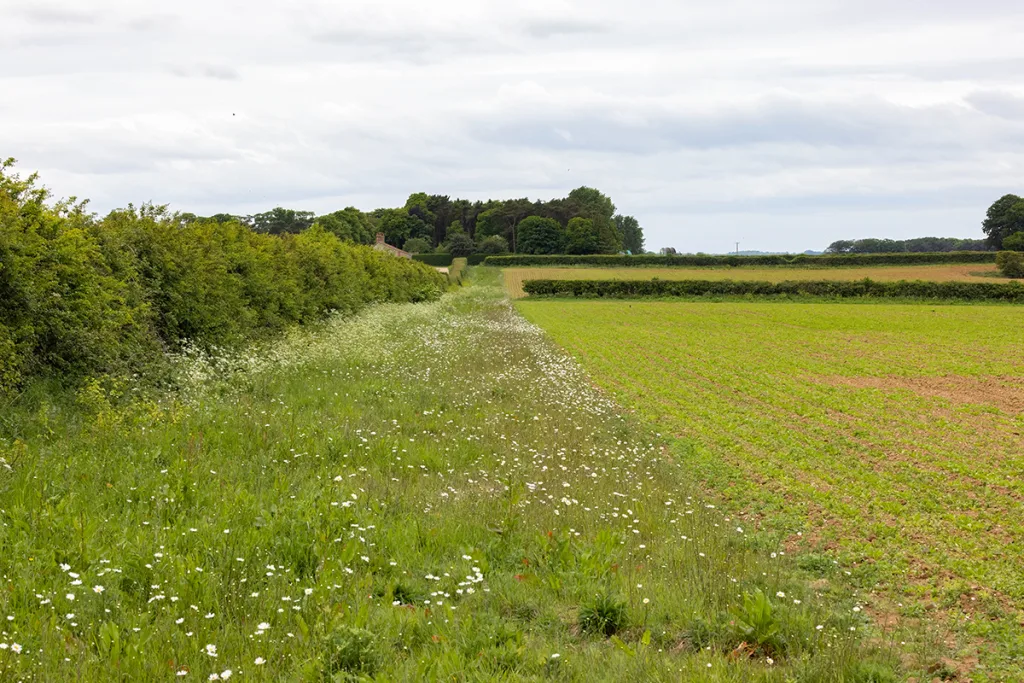
We used NFF-aligned indicators across the three value perspectives to assess outcomes from SSP–RCP futures with the LandSyMM5 global land system model. Each indicator was scored by benchmarking model outputs against target ranges for desirable futures. Even under the SSP1 Sustainability scenario (Taking the Green Road), scores for ‘nature for nature’ decline relative to a 2010 baseline, while some society and culture indicators improve. Across scenarios we see a bias towards material provisioning (for example, food production), persistent shortfalls in water regulation and pollution, and land intensive options that create trade-offs across food, water and habitats (Alexander et al., 20246).
Values based narratives for biodiversity positive implementation
In other work, we developed values‑based narratives for how the Kunming–Montreal Global Biodiversity Framework (KM‑GBF) could be implemented under each NFF perspective (Burns et al., 20257). We outline three legitimate pathways aligned with the NFF perspectives:
- nature for nature (prioritising strong protection and restoration with limited use of offsets and a stronger role for global coordination);
- nature for society (optimising ecosystem services through multi-level governance and market instruments bounded by ecological limits); and
- nature as culture (centred on community stewardship, cultural landscapes and local governance).
We also describe indicative trends in other indirect drivers under each pathway (for example, more localised systems and lower material consumption in nature as culture; higher technology uptake in nature for society) and illustrate blended approaches with case studies.
Find out more
The Land use and Food systems Lab at the University of Edinburgh
Image credits: Featured image: Image broker/Michael Runkel/Getty Images, Volunteers raking grass Phynart Studio/Getty Images, Wildflower field/Richard Hadfield/Getty Images.
- Over-reliance on land for carbon dioxide removal in net-zero climate pledges ↩︎
- Toward quantification of the feasible potential of land-based carbon dioxide removal ↩︎
- Toward quantification of the feasible potential of land-based carbon dioxide removal ↩︎
- Toward quantification of the feasible potential of land-based carbon dioxide removal ↩︎
- Land System Modular Model ↩︎
- Mapping the shared socio-economic pathways onto the Nature Futures Framework at the global scale ↩︎
- Seeds for Change: Global Biodiversity Narratives Contingent on Values-Based Interpretations of the Global Biodiversity Framework ↩︎


