Legacy giving, hands-on fundraising and scholarships have the ability to empower the next generation of climate leaders. Supporters across our community are fuelling projects and programmes that make a real difference.
A legacy for a sustainable future
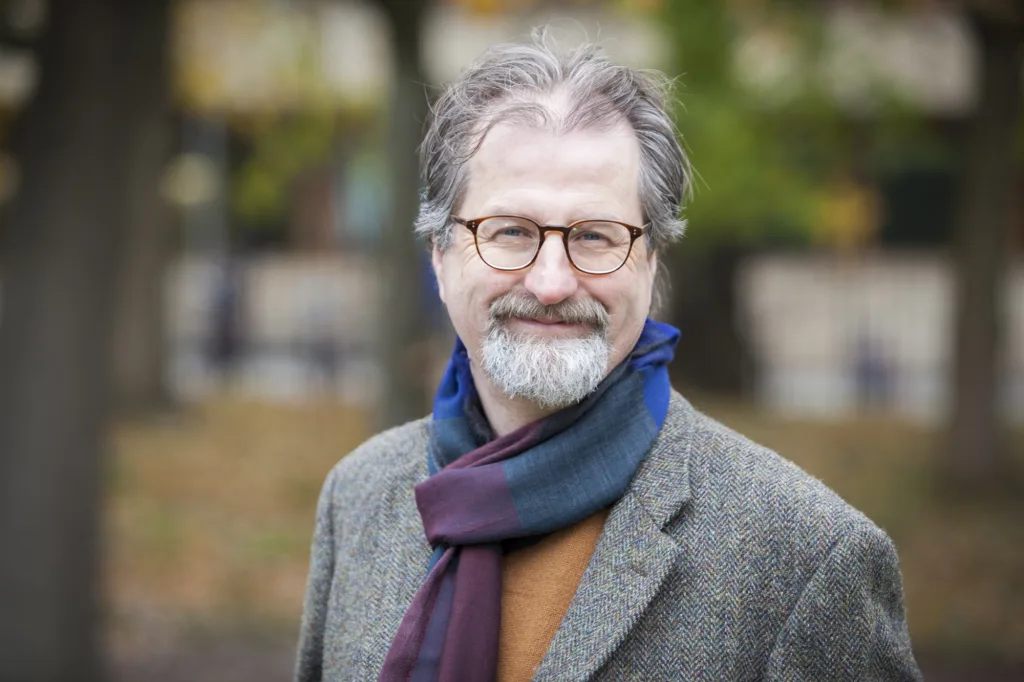
Richard Casebow, a psychotherapist and Alexander Technique teacher based in Edinburgh. He has built a career rooted in philosophy, compassion, and a deep commitment to sustainability. Although with no formal ties to the University of Edinburgh, his decision to leave a legacy gift reflects his belief that education and environmental stewardship are vital to a sustainable future.
After studying philosophy at Aberdeen, Richard briefly pursued accountancy, before a period of reflection led him to the Alexander Technique. The Technique, which he found complemented psychotherapy, shaped the following three decades of his work.
“I found a way to be a philosopher,” Richard explains. “But in the way that I can help people live richer lives by integrating physical and emotional well-being within philosophical inquiry.”
Richard chose to support the University of Edinburgh because of its reputation for making a meaningful impact, particularly in sustainability.
“I felt the biggest impact I could have was to put money towards sustainability and the environment,” he explains. “If we fail to achieve a sustainable environmental future, those who come after us may have no future at all.”
Inspired partly by the Centre for Human Ecology, which began in Edinburgh, Richard hopes his legacy of supporting rewilding and sustainability projects will help drive meaningful change.
“Through these initiatives is where my legacy can have the most impact.”
From surplus PPE to community impact

Emma Boyd’s decision to support All4Paws grew from her admiration for the student-run, veterinarian-supervised clinic that offers free care to the pets of people who are homeless or vulnerably housed.
“Many larger animal charities overlook All4Paws,” explains Emma, Exotic Animal Teaching Facility Manager at The Royal (Dick) School of Veterinary Studies. “I wanted to help the team continue to provide their vital service to our local community.”
Emma also values the experience it gives students, noting that volunteers “give up their valuable free time” and that the clinic provides “excellent hands-on training… which will be of huge benefit to them when they qualify as vets.” For Emma, All4Paws “deserve every penny raised”.
Her fundraising idea emerged from a practical challenge at the Royal (Dick) School of Veterinary Studies, where surplus PPE had built up as safety requirements changed. “I had the opportunity to go through our older PPE to salvage useful equipment that was no longer needed at Easter Bush”.
Together with colleagues Heather and Sharon, she spent several days clearing the campus and gathering more than 100 bags of usable items. “We were thrilled with our haul.”
The team sorted everything, donating lab coats, riding helmets, and boots to local charities and community groups. The remaining items formed a two-day pop-up shop where students could pay whatever they felt the equipment was worth. “This was great, as it meant that all our students could afford to buy whatever they needed.”
The response was far beyond expectations. “The pop-up shop was a roaring success, and the amount raised was utterly unbelievable.”
The experience has inspired Emma to continue the initiative. “I would love to make this an annual fundraising event for the school,” she said. Her advice for others is simple: “Everyone loves a bargain, whatever you are thinking of selling, now is the time to do so!”
Supporting future climate leaders

In the School of Geosciences, the University offers a scholarship for students enrolling in the MSc Climate Change Management programme. Established by alumna Catherine Barber, in honour of her father, Dr John Douglass Barber. The award offers £5000 to students beginning the programme in the 2025/26 Academic Year.
The scholarship applies directly to tuition fees, with remaining funds also supporting living costs. Recipients are also encouraged to actively engage in the postgraduate community through presentations, training and development opportunities throughout the year.
For Catherine, who completed her MSc in Carbon Management in 2018, the decision to create the scholarship is rooted in her own experience on the programme and her father’s belief in education as a force for progress.
“I had a wonderful time studying for my MSc in Edinburgh,” says Catherine. “Ten years ago, when I started, the programme was a pioneer, and it’s fantastic to see how graduates have spread in all directions. My online classmates came from every continent and we now enjoy being part of a global network of climate professionals.”
Catherine adds: “I’m glad to support the ongoing success of this course and have offered this scholarship in memory of my father John Barber, an academic historian who believed in political and social change and was always optimistic about the future.”
Opening doors
This spirit of optimism and purpose is already being carried forward by current scholarship recipient Lucia Sadier.
“The MSc Climate Change Management scholarship has made an enormous difference to my studies,” explains Lucia. “It has allowed me to fully immerse myself in the course and take advantage of everything the university has to offer.”
Drawn to the programme to deepen her understanding of sustainability, she hopes to use her training to support organisations in shaping their climate commitments.
“After graduating, I hope to work in a role advising either private or public sector organisations on their net zero strategy,” says Lucia. “I believe that there is still significant progress to be made in this sector. I believe that the knowledge and experience gained on this course will allow me to play a meaningful role in driving change.”
Energising hands-on student climate project

The University’s Student Experience Grants are one of the ways alumni can fund projects that enhance students’ social, academic, entrepreneurial, sporting or cultural development. The one-off grants of up to £5,000 have supported projects at the University for many years.
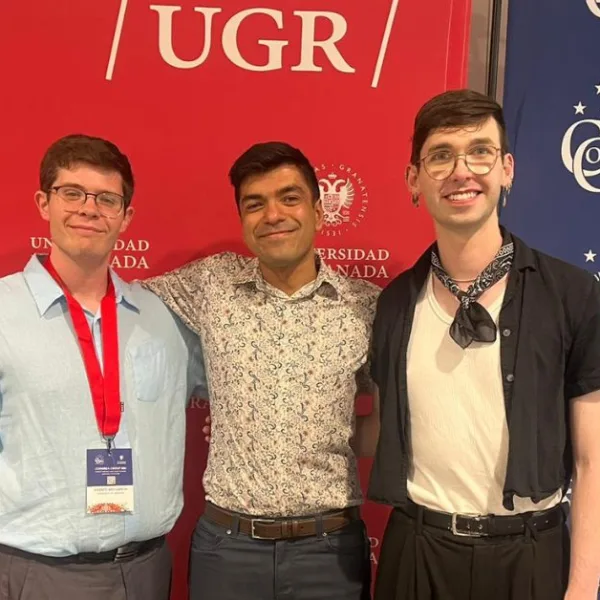
Recently, a Student Experience Grant funded enabled nine MSc Carbon Management students based in Kenya to take part in a project to bring their learning to life. One aspect of this was visiting InsectiPro, an innovative insect farm. The farm sustainably produces valuable insect products for future-proof food and value chains for mass production.
For one of the students, Marvel Owina, seeing climate solutions in practice transformed the way she understood key concepts.
“Visiting InsectiPro gave us a chance to see how climate solutions are being applied locally,” says Marvel. What struck her most was witnessing carbon finance in action. “What stood out was how the company is also tapping into carbon markets for extra income, something many of us had only read about in theory.”
The group then spent time at the wildlife sanctuary around Lake Elementaita, where nature itself became part of the classroom.
“We learned about conservation work and nature-based solutions,” says Marvel.
In the field
Being immersed in the landscape helped the students connect theory with lived experience. In particular, the students could see how ecosystems sequester carbon, how communities handle natural resources and why conserving nature is also a climate solution.
Additionally, a highlight of the project was the chance to meet in person – something that rarely happens for remote learners.
“This was one of the few opportunities we had to meet,” shares Marvel. The experience strengthened their sense of belonging. It even inspired students to begin building a Climate Action Network to support future collaboration.
Even when plans changed at the last minute, the outcome remained overwhelmingly positive. A sudden public holiday meant rearranging the schedule, but InsectiPro stepped in immediately. “Fortunately, they were incredibly supportive and agreed to host us on short notice,” she said.
For Marvel, the project has been a powerful reminder of why she chose this field. It offered real-world insight, fostered student connections and showed how donor support can help students witness climate action in practice.