Edinburgh Futures Institute (EFI) is one of six Data-Driven Innovation (DDI) hubs. Set up with government funding from the Edinburgh and South-East Scotland City Region Deal, these hubs each partner different industry sectors. EFI focuses on the creative industries, finance and fintech, the public sector, and travel, tourism and festivals ‘innovation clusters’. Edinburgh Innovations, the University’s commercialisation service, manages these clusters.
EFI’s mission is to bring partners together, from various disciplines and sectors, to address the challenges of today and tomorrow.
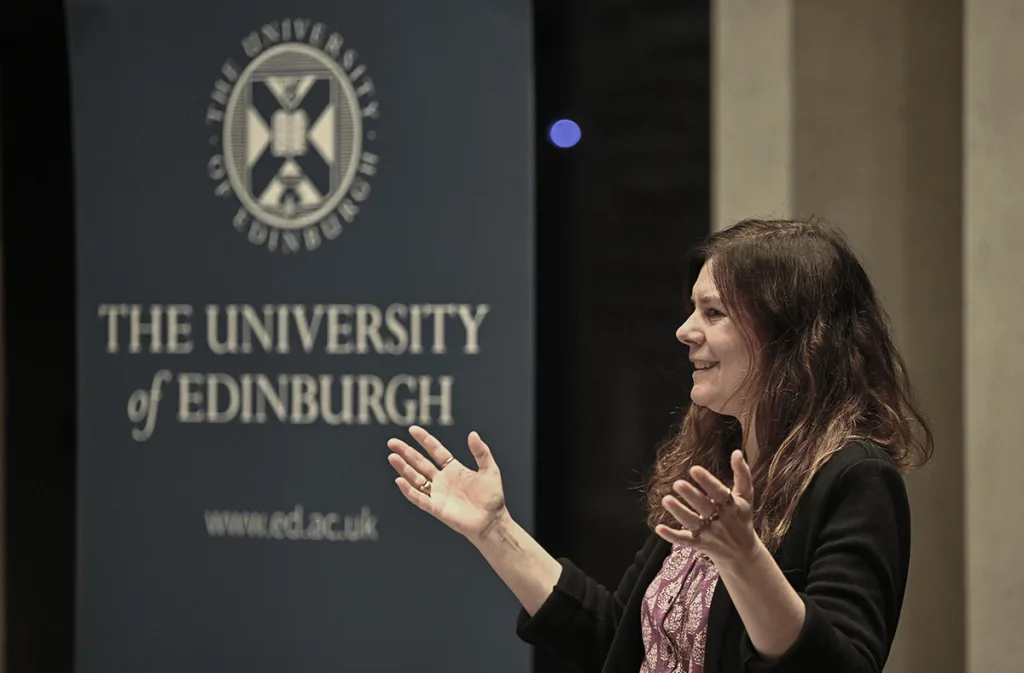
Its director, Professor Marion Thain, explains: “EFI is an innovation hub. What that means, is we work with external partners to understand their needs and translate the University’s world-class research into responses to some of the world’s great challenges.
“We take this work forward through our education, training, consultancy, and, crucially, through innovation work that boosts socially responsible economic growth.
“We don’t employ academic staff directly. As a disciplinary neutral space, we have a particular mission to bring academic researchers and teachers together from across the University to work in multidisciplinary and transdisciplinary groups. Collaboration between internal and external partners, and between schools and disciplines, is crucial to the fresh perspective we collectively bring to what can sometimes seem like intractable global challenges.
Challenges
“It’s worth remembering that the world’s greatest challenges are not discipline specific,” Professor Thain continues.
“They are almost always human and social challenges, as much as they are technical or scientific challenges. We will only make a step-change in our solutions to those challenges if we bring together diverse areas of expertise around them.
“We are distinctive in that everything we do is in collaboration with external partners. Our work is directly connected with real-world needs and challenges. We also bring futures methodologies to our work. We’re thinking not just about the challenges of today but about the challenges of tomorrow, and what will create a sustainable future for subsequent generations.
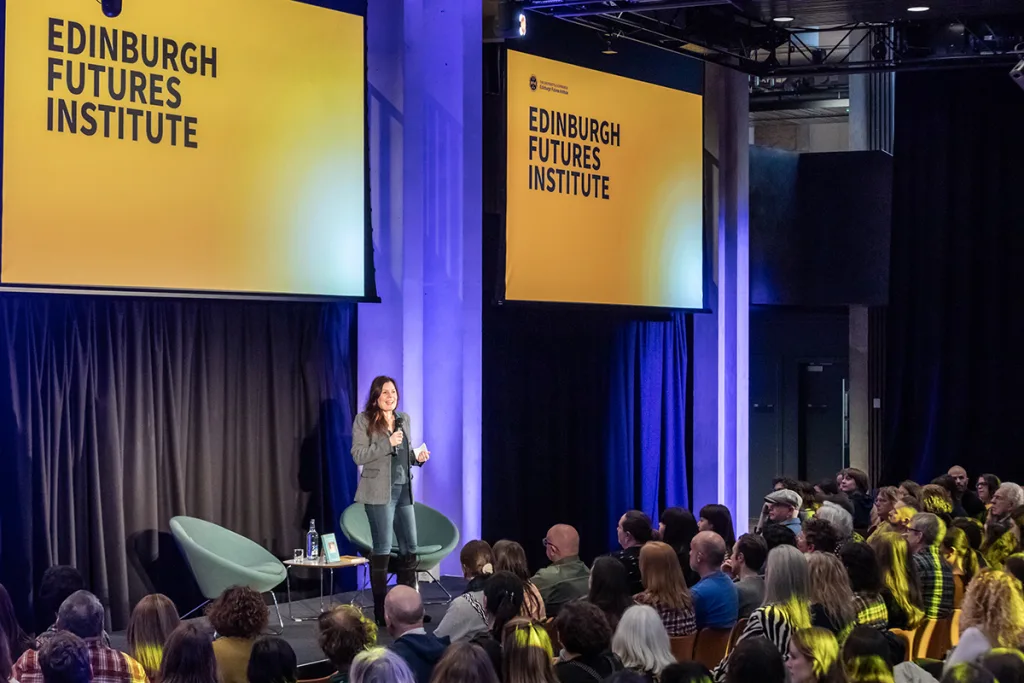
“EFI also has a golden thread running through everything we do. That is to attend to the intersection of technology with individual and social needs and values. We have a particular mission to foster socially responsible technological development, use, and innovation.”
Restoring a landmark
EFI’s work takes place in a state-of-the-art space for collaboration, innovation, education, and research.
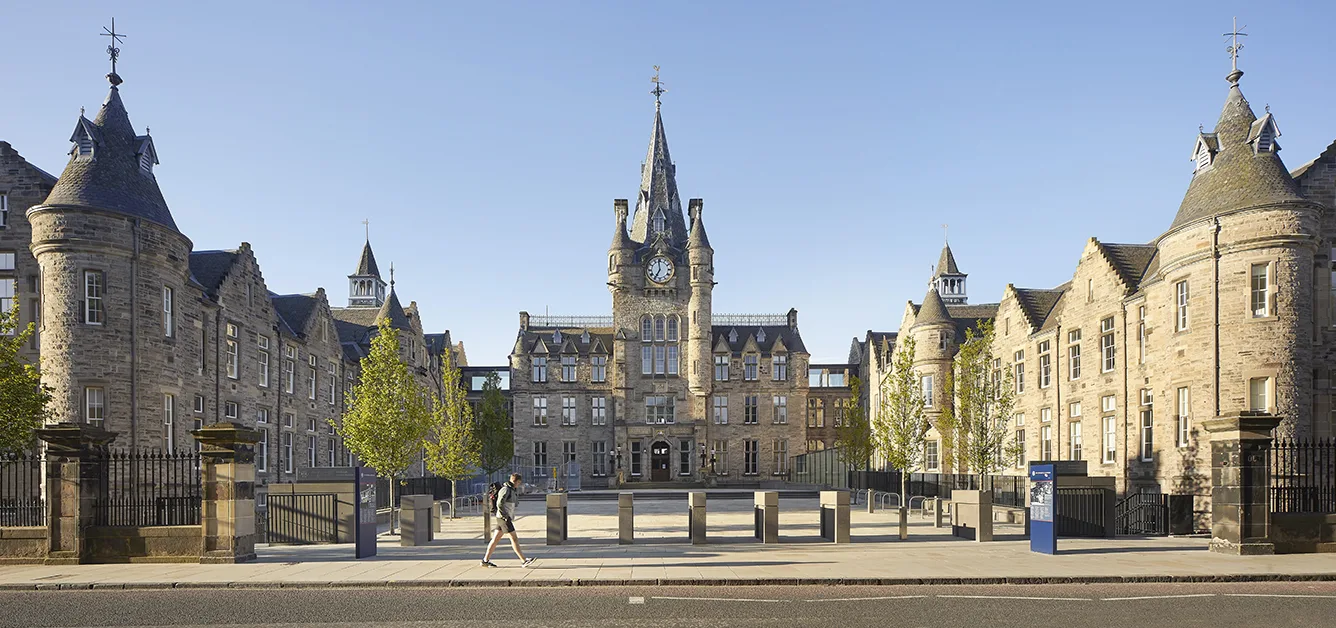
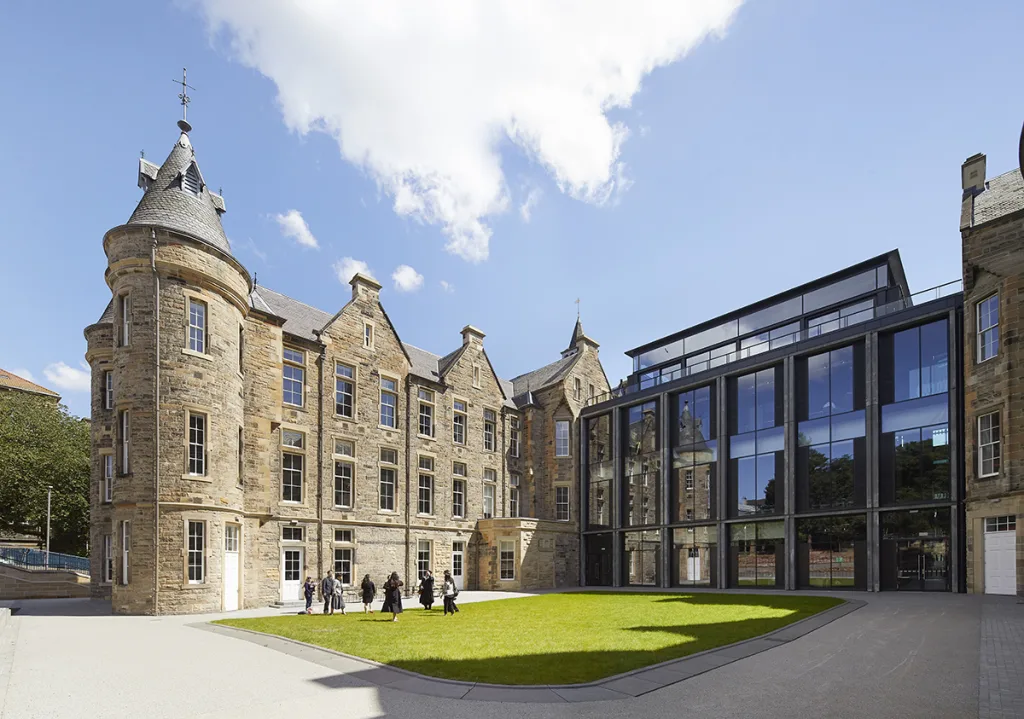
An extensive, seven-year, multimillion-pound restoration transformed a disused city landmark. The former Old Royal Infirmary is now one of Europe’s largest institutes for interdisciplinary learning, research and innovation.
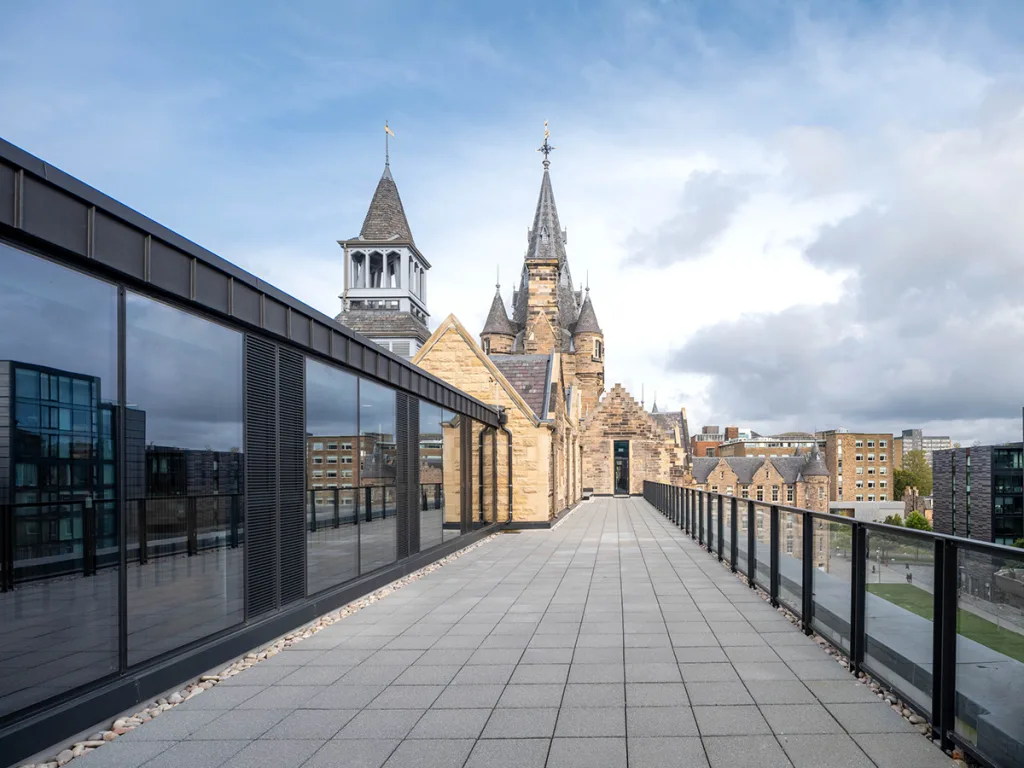
When it originally opened in 1879, the Old Royal Infirmary followed a renowned ‘pavilion’ plan. Florence Nightingale advised on its building and layout, endorsing the plan. Nightingale conducted meticulous research, collecting and studying data to understand a variety of problems, such as infection rates.
This led to patients kept apart in self-contained, wide, airy spaces designed to discourage the spread of infection. Large, specialised windows allowed fresh air in to circulate, even during bad weather.
These ‘Nightingale Wards’, as they were known, have been retained. They have been modernised for reuse as teaching and workspaces. They create secure, access-controlled incubation areas, ideal for startup businesses or innovation and prototyping labs.
“The ward structure of the wings of the old hospital enables us to create unique ecosystems of researchers, students and external partners,” explains Professor Thain.
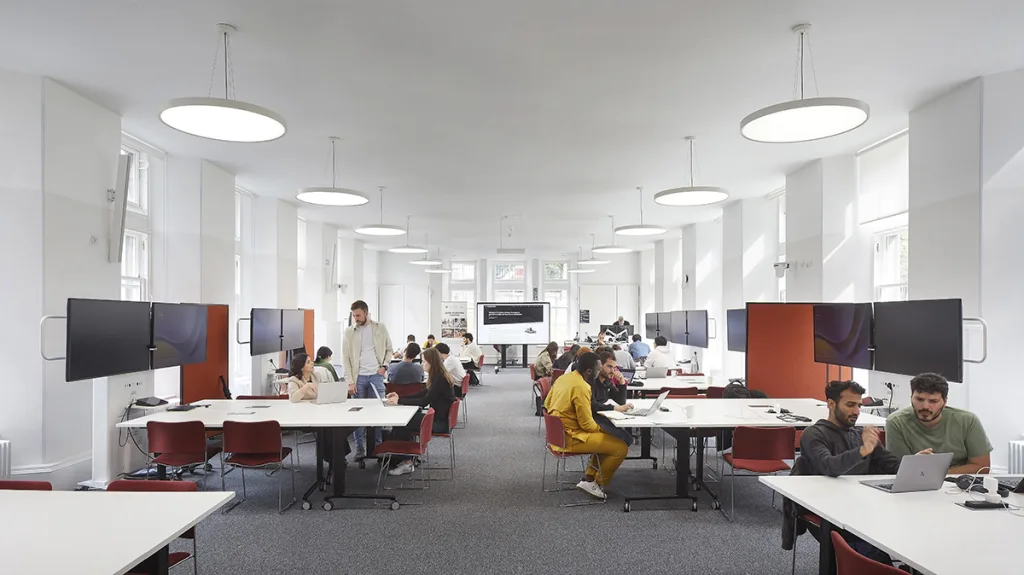
The reimagining of the building unites modern design with restored original architecture. Its 20,000 square metres showcase state-of-the-art teaching facilities, partnership co-working areas, and exhibition and event spaces. The project also transformed the local area. Community benefits include the creation of a major public square and new garden spaces. New access points have reopened the historic site to the public.
Meet, mix and mingle
Professor Thain said: “The benefits for us of this particular space are significant. One third of the total floor space is open-plan, community workspace. That can be used by anyone who comes into the building, including the public. It’s a gift to the local community. It’s also critical to the mission of EFI. To be the place where people from across sectors, and the public, meet, mix and mingle with each other and with the University.”
One of the strengths, and intentions, of EFI is to provide this environment for conversations that otherwise wouldn’t happen.
Professor Thain said: “EFI is a convening point – for colleagues and students from across the disciplines in the University, and with external partners and the general public.
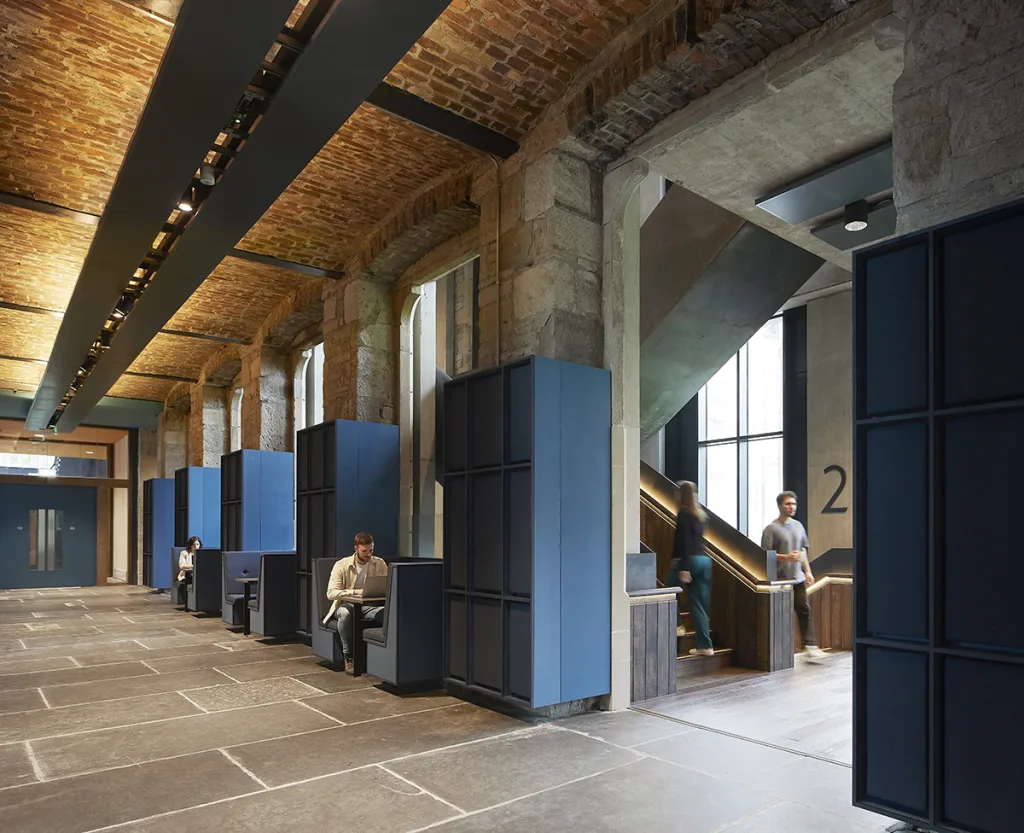
“In the open access seating and desk spaces in the central spine of the building, our diverse group of users is working, meeting one another, relaxing, chatting and visiting the Canopy cafe for coffee.
“Then in the wards, which are pass key entry only, we have built secure communities of researchers, students, and external partners clustered around themes or focal industry sectors. The wards are the engine room of EFI with all manner of research and innovation projects being developed there.”
Supporting growth
All this places EFI in an ideal position to harness positive collaboration and focus efforts for the benefit of everyone.
“The impact of EFI has already been huge,” says Professor Thain.
“The DDI project is supporting regional economic growth, and our education programmes are upskilling hundreds of people to help create a better future.
“We’re currently seeing a change in what society expects from its universities. There is a much greater expectation that universities will work with external partners and lend their expertise to solving some of the challenges those partners are facing. Of course, that work has always happened, but it is now expected to be a much greater part of a university’s activity.
“EFI, like the other DDI hubs, is designed to take forward this work with and for the University. In that way, it is critical to the University’s ability to evolve and stay relevant to society.”
Work in progress
EFI opened its doors in the summer of 2024. It welcomes industry partners and collaborators, students, academics and researchers, and the public. Some of the work already taking place here includes:
Preventing crisis
The Scottish Prevention Hub is a national co-located and co-directed collaboration between EFI, Public Health Scotland, and Police Scotland. The Hub contributes to a growing, system-wide shift in Scotland from reacting to crises, to preventing them.
It brings together partners from across public services, academia, and the third sector. They work on challenges no single organisation can solve alone – advancing primary prevention and reducing inequalities. Its work spans data collaboration, place-based insight, cross-sector research, system learning and evaluation. The Hub’s collaborative leadership supports earlier action and improved lives.
Dr Kristy Docherty, Co-Director of the Scottish Prevention Hub, said: “The Hub is about helping the system work together more effectively. We’re using data, evidence and effective collaboration to act earlier and make a meaningful difference. Being based at EFI is an active ingredient, enabling a different kind of conversation across disciplines and sectors on how we approach prevention.”

Shaping the future
The infrastructure of our cities, towns, and communities has a tremendous impact on our quality of life. It affects how we live, work, trade, travel, and communicate with each other. Over the next 30 years, the world will spend more than £100 trillion on infrastructure. In a changing world, how our infrastructure develops to address increasingly complex integrated challenges from climate change, sustainability, resilience, and global population growth, will be critical.
The Centre for Future Infrastructure (CFI) brings together expertise in fields such as engineering, business, geosciences, architecture, planning, social sciences, informatics, health, and law. It works with industry and the public sector to address these challenges.
Professor Sean Smith, Director of CFI, said: “Future infrastructure and the delivery of key net-zero outcomes is dependent on combining expertise across an interdisciplinary approach. Being based in EFI provides multiple opportunities to engage, across many stakeholders from the public sector, industry and academia.”
CFI also includes the Centre for Net-Zero High Density Buildings, funded by UK Research and Innovation (UKRI). This research partnership will trial new prototypes and retrofit buildings with low-carbon materials, heating and cooling systems, and energy storage technology. It aims to make densely packed buildings and streetscapes in UK cities, where some of the country’s lowest earners are usually housed, more energy efficient. This will reduce carbon emissions, lower heating bills, underpin economic growth, and address health problems associated with cold and damp housing.

Reimagining technology
The Centre for Technomoral Futures was launched in 2020 and is now an integral part of EFI. Its aim is to combine technical, moral and social expertise to address the ethical implications of emerging technologies such as AI and machine learning, and other data-driven advances. Situating this work in EFI benefits professionals in fields such as philosophy, law, computer sciences, social sciences, education, and health. They bring their unique perspectives together in an innovative interdisciplinary environment and together explore the challenges that might exceed any single area of expertise.
Dr Emily Sullivan, Co-Director of the Centre, explains: “The Centre for Technomoral Futures is an interdisciplinary research institute that researches the ways we can reimagine technology to promote human and societal flourishing.
“EFI is the perfect setting to achieve these goals because it provides a melting pot of industry, creatives, and academics. Real change comes from getting outside of your disciplinary comforts, to engage different perspectives on the same set of problems.”

Image credits: Chris Scott, Getty Images, Hufton+Crow, Neil Hanna Photography, Peter Cook.