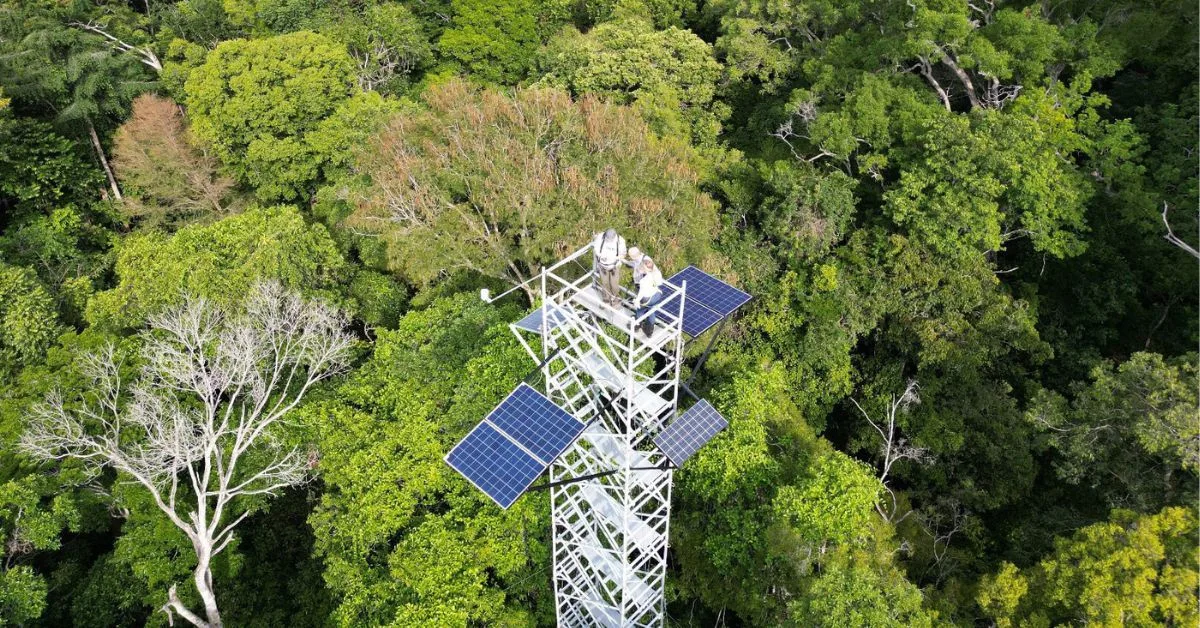
Rainforests hold huge value to humanity. They provide livelihoods to communities close and far, they harbour a large slice of global biodiversity, they protect water and soil. Protecting forests and managing them well have been seen as ways to help us in the fight against climate change. Forests ameliorate climate change and its extremes, and they underpin our shared biocultural diversity, but any successful discussions on the future of forests must go beyond climate alone. They need to embed the integrated value of forests to society, with new agreements delivering justice as well as environmentally and economically positive outcomes.
Tropical rainforests have attracted increased global attention in recent months following the huge United Nation’s climate conference “COP 30”, held in November 2025, in the city of Belém, near the mouth of the Amazon River, Brazil. Globally there are competing demands from people on forests and on the land they occupy. Across Amazonia and similar regions, these demands reach a maximum focus. Finding the best solution in each case is not easy; it involves a complex balancing act with changing rules and resources.
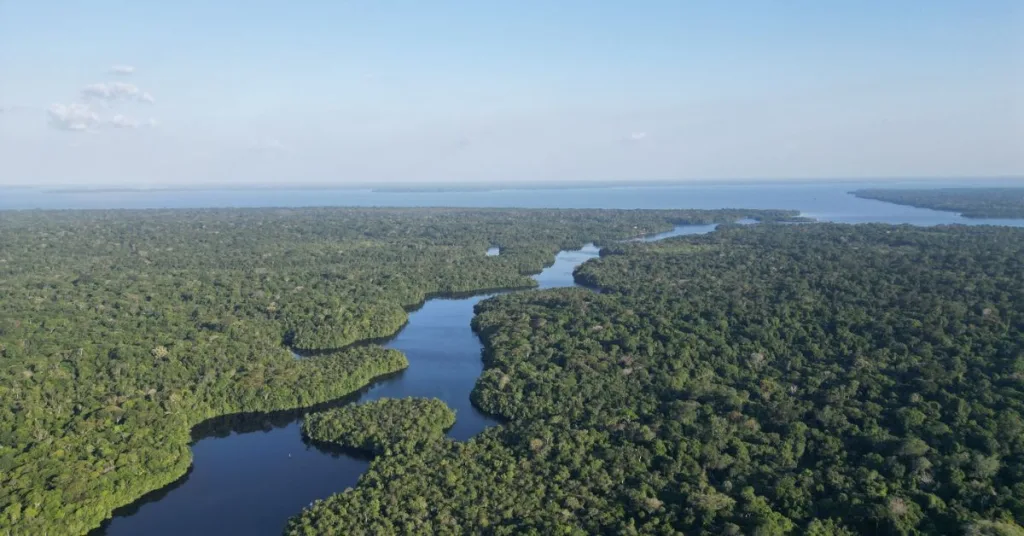
The value of forests
Social and financial sustainability are critical to success, but no plans will work without being strongly informed by science, to enable us to monitor, quantify and understand future change. Although these issues are not discrete to Amazonia or even the tropics, tropical forests play a disproportionately large role in helping to keep our climate stable. The recent rise in awareness of the value of forests and the growing risks to them has been global. The University of Edinburgh’s Centre for Sustainable Forests and Landscapes1 provides expertise and builds leadership across this complex and contested field, with a focus on the wet and dry tropics as well as in cooler-climate zones.
One of the biggest environmental questions of our time focuses on the future of Amazonian forests and our climate. Forests absorb carbon out of the atmosphere, acting as a brake on climate change. In the absence of climate extremes and deforestation, Amazonia is thus able to act as a globally large ‘carbon sink’. In addition, water evaporates from Amazonian rainforests as they grow and is partly recycled as rain that then supports other forests, agriculture or hydropower further afield. Amazonia and tropical forest regions globally have a key role to play in helping to maintain environmental and economic stability, but they are under pressure from increasing extremes in climate and land use change.
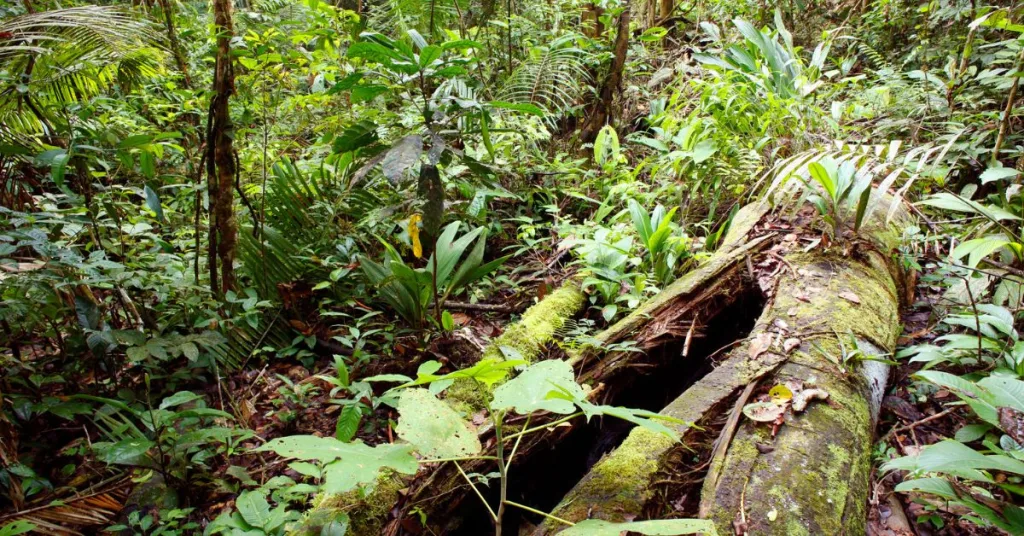
Climate cost
Edinburgh scientists, collaborating closely with colleagues in Brazil and elsewhere, have helped lead in this area for over four decades. Our recent work has demonstrated that even intact tropical rainforests can experience high rates of tree death during extreme or persistent drought, although thankfully, the surviving forest shows some resilience over the longer term. High tree death rates exact a climate cost by releasing more carbon to the atmosphere as the dead trees decompose. The effect can be large – increased carbon losses from intact Amazonian rainforests in recent years have weakened the strength of its huge natural carbon sink. Indeed, elsewhere we have shown recently that Australian tropical rainforests switched from being carbon sinks to being net biomass carbon sources as early as the year 2000. In both regions, increased tree death rates within intact rainforest have been found to be a key factor, with intensifying increases in heat and drought extremes being important drivers.
Accelerating climate change and land use
What does this mean for how we manage tropical forests as a critical part of our Earth system, our home? Even if we just focus on carbon, we know that tropical forests remain globally important carbon stores, irrespective of the size of their current carbon sink. Removing these forests would therefore cause significant carbon emissions to the atmosphere, accelerating climate change and costing us all, even before we consider other effects on biodiversity and society. Extreme climate events are often associated with the combined impact of climate change and land use, and have rightly focused global attention on halting deforestation. However, our recent collaborative work has also shown that even protected forest regions in the Amazon that are remote from the forest edge are experiencing rapid increases in climate extremes, underlining the pervasive impact of accelerating climate change.
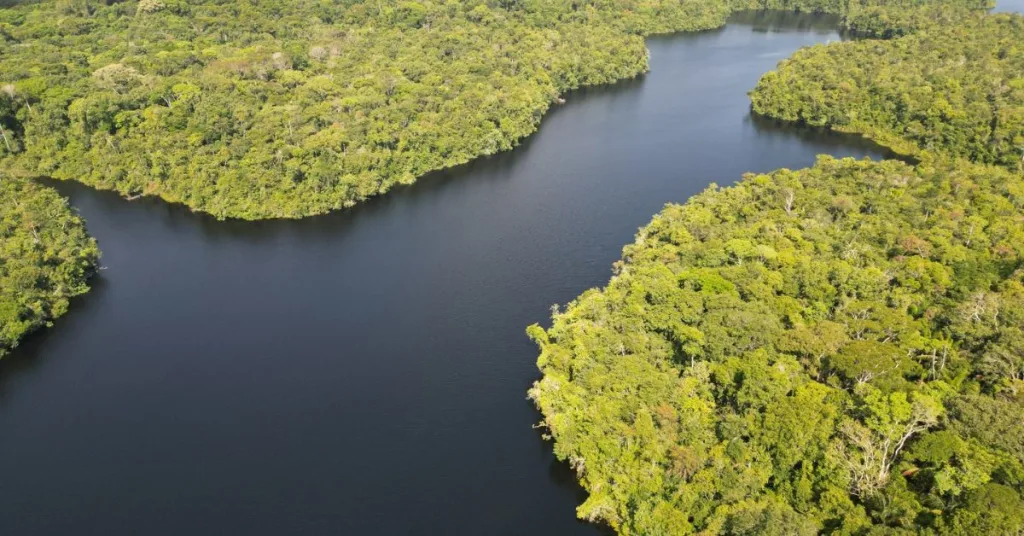
New approaches
Avoiding tropical forest loss and maximising its recovery are obvious key aims for improvements to forest policy, coupled with the goals of clear social, economic and environmental benefits. Yet if, as our findings suggest, both the forest frontier and the ‘intact’ interior are both at high risk, this emphasises even more strongly the need for reductions in global greenhouse gas emissions. Important new approaches to funding and enabling adaptation and conservation interventions in tropical forests, including the Fund for Responding to Loss and Damage and the Tropical Forest Forever Facility, have begun to attract substantial international investment, though how successful they will be remains to be seen. However, despite the promise of new approaches with tropical forests, the central need for rapid global emissions reductions must also remain in focus if we are to avoid both further advances into the tropical forest frontier and intensification of the effects of climate extremes on forests in the future.
Photo credits: Featured image and rainforest river by Professor Patrick Meir; rainforest floor by Getty Images; rainforest by Molly Champion