Whether you love, hate or haven’t heard about the Scottish Government’s proposed food price caps, we can all agree that something needs to be done to make healthy food more affordable. For households in the lowest income fifth, 14% of their expenditure goes to food1 (compared to 11% for an average UK household). But it’s not just about food, it’s about healthy food that nourishes us and our families. In that regard, according to The Food Foundation, households in the lowest income fifth would need to spend 49% of their disposable income2 to afford the government-recommended healthy diet.
Whilst recent price hikes have been attributed to conflict in the Middle East, previous to that were the Russia-Ukraine War and, before that, the Covid-19 pandemic. In a warming, less peaceful world, it costs more to produce food, so we can expect these higher prices are here to stay. According to an analysis by the Energy and Climate Intelligence Unit, prices could be up to 50% higher by November3, relative to mid-2021 prices.
Boosting public health?
In a temporary attempt to address these higher food prices, the UK Government is proposing a suspension of tariffs.4 In May, they published a list of 125 seemingly random items, from garlic to tomato ketchup to white chocolate. The call for input noted, “Final decisions to suspend any tariff will carefully consider the potential benefits for consumers. Decisions will be balanced against the implications for domestic producers, developing country impacts, food security, broader international commitments, and other relevant considerations.” We would hope that “other relevant considerations” will include public health.
The Scottish Government, on the other hand, has proposed the introduction of legal price caps on essential food items sold by large supermarket chains in their stores or online. Their consultation on the proposal closes on 24 November.5 Food Standards Scotland has proposed that the list of essential foods include things like bananas, apples, frozen peas, tinned tomatoes, pasta, bread, eggs, tinned beans, and milk.6
Opposition to the proposal is strong and there are many claims worth serious consideration. For example, retailers may try to recover lost margin by paying farmers less or sourcing cheaper ingredients from outside the UK. They may also try to recover lost margin by hiking prices of items not on the list, which makes the list incredibly complicated and easy to game.
Balancing affordability with convenience
However, making a list of raw ingredients cheaper isn’t going to address unhealthy diets and the ailments that follow them. The latest Food in Scotland Consumer Tracking Survey7 asked a representative sample of adults why eating a healthy balanced diet is difficult.
The most commonly reported reason was not being able to afford it (39% reported this). Two reasons tied for second most common (both at 36%): finding it easier to buy convenient foods and there are more unhealthy than healthy foods to choose from. It’s noteworthy that convenient foods are automatically assumed to be unhealthy – when there is nothing inherent to convenient food that means it must be unhealthy.
A recent national survey in Scotland8 highlighted food “on the go” as a core part of our diets, with people citing taste and convenience – and of course affordability – as important in driving their decisions. Rather than opposing these trends, we should embrace them, and flood the system with healthy, affordable food “on the go”.
Revolutionising the ready meal
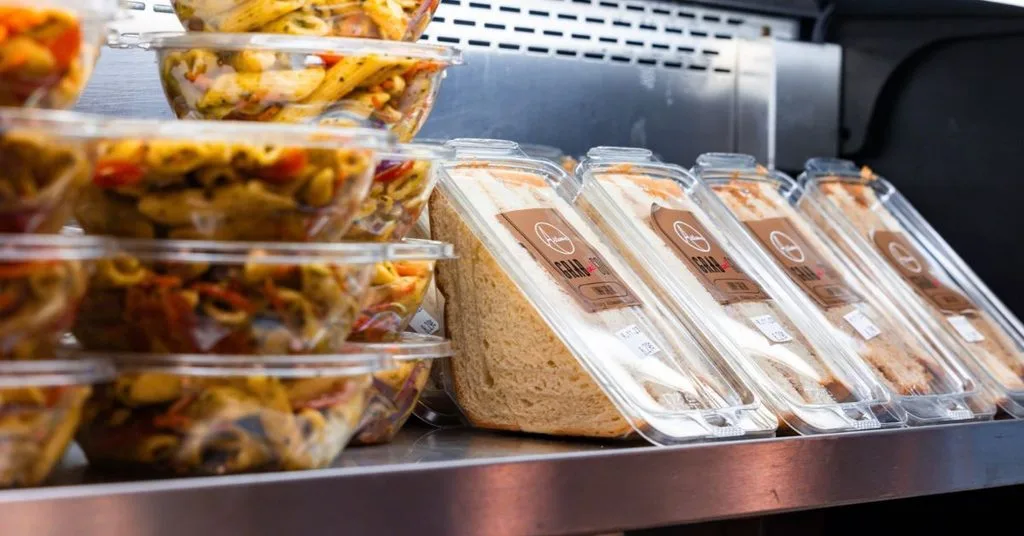
We propose that the list is dropped and the UK and Scottish governments instead consider a statutory requirement that all supermarket retailers must make available a ready meal under £2 that meets certain requirements such as being reasonably low in salt, sugar and saturated fat, plant-forward, and containing whole grains. They could even consider a requirement that, wherever possible, ingredients are sourced from UK farmers.
A statutory affordable healthy ready meal works because it meets people where they’re at, rather than assuming people will cook from raw staples.
Imagine an Everyday Meal Deal (Affordable Provision) (Scotland) Act 2026, analogous to the Period Products (Free Provision) (Scotland) Act 2021, mandating that supermarket retailers make these affordable healthy ready meals available.
We all love a good meal deal. The concept has come a long way since Boots first introduced it back in the early 2000s. Today you can go traditional with a ham sandwich, bag of crisps, and Coke, or go for a cauliflower shawarma and five bean houmous, banana, and super smoothie with soya protein powder. Perhaps it’s time for the meal deal to evolve into your favourite £2 “everyday meal” or “scran deal”, encouraging competition between retailers for provision of the most sought-after ready meal.
It’s time for government to get serious about making healthy, convenient food more affordable. A new healthy ready meal deal could provide relief for families in the months and years ahead faced with rising food costs and more and more time pressure.
Find out more
Image credits: Featured image by Markus Spiske, vegetables by NRD, sauces oo shelves by Daria Stategy and sandwiches by David Brown
- Percentage of spend on household food and non-alcoholic drinks ↩︎
- Poorest families with children need to spend 85% of their disposable income to afford a healthy diet ↩︎
- Food prices set to rise by 50% since start of cost-of-living crisis, new analysis shows ↩︎
- Call for input on goods for cost of living tariff suspensions ↩︎
- Price controls on essential food items: consultation paper ↩︎
- Fair Food Price Caps ↩︎
- Food in Scotland Consumer Tracking Survey Wave 18 ↩︎
- Out of Home Food Intake and Behaviours Among Adults Living in Scotland, 2025 ↩︎