2026 is billed as being a triple-COP year. There’s the COP17 UN Convention to Combat Desertification in August, the COP17 UN Biodiversity Conference in October, and then the major climate conference COP31 will come round again in November. Against the backdrop of our current, overheated political environment, it is worthwhile pausing to reflect on all that occurred at COP30, the annual global meeting to protect our overheated natural environment. It may have been given cursory mention in the global news agenda, but what did we achieve in that global gathering, and why is it important to share the outcomes?
I know I am the sort of person who sees a glass half full and thinks, well, actually, from this angle that glass could almost be three quarters full. I came back from COP30 in Belem with enthusiasm and optimism. I appreciate others did not feel the same way. The global media, for the most part, hammered COP30 – there was more bandwidth on the fire (extinguished within six minutes); protests (the majority peaceful); broken air-conditioning and the cost of accommodation – than on the content of the deliberations. What was that about, who benefited from such negativity?
This is important because the annual COPs do two different things. They establish a key point in the annual governance of negotiations, where decisions that have been planned, suggested and populated should be collectively signed off. And they create a focus and momentum on climate change as a global issue.
For both of these purposes to function we need a media that is committed to maximising every opportunity. A media that encourages everyone to look at climate change and to listen to those with lived experience. A media that listens to the scientific evidence, and allows us all to learn what to do and how to do it. Climate change is everyone’s business.
A sense of place
Hosting a COP in the Amazonia region was brave and purposeful. Even if no useful discussion had happened, turning the world’s attention to the Amazon was strategic. The Amazon is our microcosm for demonstrating climate change. There we see the intersection of the exploitative drivers and determinants changing our climate. We also see the mitigation measures to stop climate change, and the adaptation measures to manage climate change. These are all placed on the people of the Amazonian region, who are living with and through these intersecting forces. It is a microcosm of the inequities and injustices of a changing climate, but also a microcosm of creativity and adaptation.
We are reminded that the answers to almost all the world’s great problems are already in the world, they are just not with the people that our many powerful academic, financial, parliamentary, legal, business and environmental systems converse with, and assume have answers.
Setting priorities
Preceding COP30 was the COP Presidency’s Action Agenda of six thematic pillars underpinned by 30 objectives. The message of the Action Agenda was one of connection and collective action. The six pillars are not separate entities to be tackled independently, they tie together and each in their own way affects lives and livelihoods.
The Action Agenda was about setting out the parameters for the Global Stocktake, what the Brazilian presidency called our globally determined contribution, as much as a driver for nationally determined contributions from each country. It sought to connect the policy and political statements of good intent to tangible actions, delivered with, by and for people.
A COP of trust and transparency
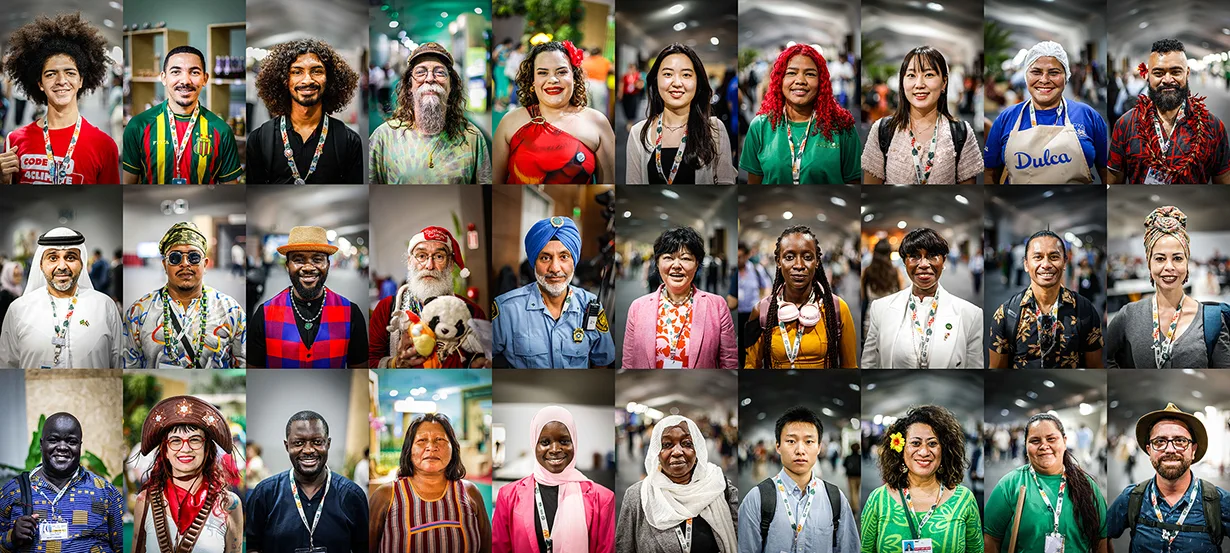
COP30 was billed a COP of the people, and it definitely lived up to this. The Green Zone was the most vibrant Green Zone I have attended. It was full to brimming with people. The Amazonian region was not some space outside, separated by sterile walls and lights, desks and chairs. In the Green Zone we knew we were a guest in the Amazon region. Nature was all around us, fully present. The natural world is the place which gives and sustains life. And when nature is being destroyed, then we are being destroyed.
The Blue Zone, with its pavilions from many (but not all) countries, brought national colour and an opportunity to connect. I met so many people in their pavilions, attended and spoke at various meetings hosted by countries, and by organisations such as the British Council and the UN Climate Change High Level Champions.
In the Green Zone what struck me most was the enthusiasm for science. I sat in packed sessions on dengue spread and shifting malaria outbreaks, led by the Evandro Chagas Institute. There was an urgency to listen, to ask questions, to explore the meaning of climate change on us. Indeed, the whole city had events describing how our climate is changing, why it is changing, and what these changes are doing to landscape, to physical and mental health, to the air, to habitat, to city space and infrastructure.
And there were many meetings outside the official Blue and Green Zones. TED Countdown House was exceptional, hosting a 12-day programme that covered every major theme and created a convening space for leaders to talk candidly and make decisions. Lindsay Levin, the powerhouse behind the House, noted that a key message coming from the discussions was that the future requires far more than technology, it requires moral courage. Ethical decision making will matter, and the Global Ethical Stocktake, which launched at COP30, shifted the parameters of the art of stocktaking. Launched by President Lula and Antonio Guterres, the UN Secretary General, the Stocktake centres on intangible goods that constitute our diverse cultures and our common heritage – compassion, care, the power of the arts to make just decisions and to translate decisions to action through connection.
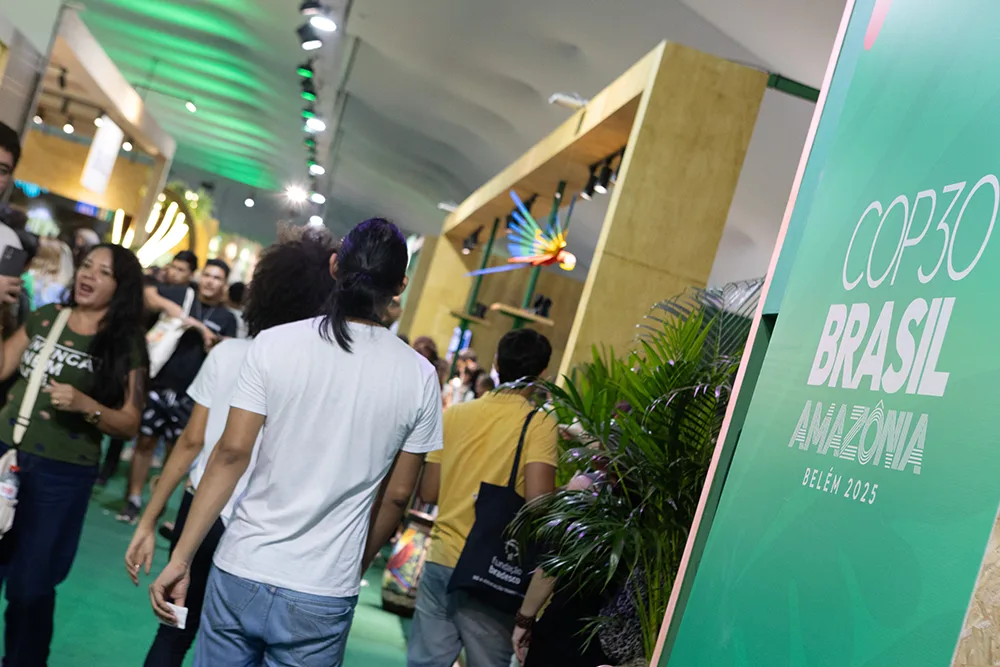
Connection matters
Two highlights of COP30 stand out among several activities. The launch of the Belem Health Action Plan and the launch of the Jobs and Skills for the New Economy initiative.
The Health Action Plan is a roadmap for health system response and resilience. It has three core pillars and two intersecting principles – namely, enhancing health equity and climate justice and the principle of accountability through social participation.
The first of the three pillars – that of enhanced surveillance – calls for much more investment into the processes of integrating climate and health data. Collecting it is only the first stage, the harder and essential role is to integrate data so that the read outs tell us what has happened, what is happening and what is coming down the road.
Capacity building as a second core pillar focuses on the need to ensure that our health systems are equipped to respond to the climate emergency in measured, service-responsible and managed ways. Health System resilience is not just having the tools and resources to hand, but being able to utilise them for prevention of crises while delivering all of the essential routine services. That is an ask that isn’t just about creating new interventions but about the integration of what we know will happen in the future with the health realties of the present. And thirdly the pillar of innovation and technology, which recognises the significance of the health sector as a change agent leading a paradigm shift.
This is a completely new way of looking at health and the health sector – health becomes the engine of growth that enables human and planetary flourishing. No one left the launch unaware of the chilling fact that the changes happening to our climate are changing the nature of health – yellow fever, malaria, chikungunya, dengue are all on rise as rising temperatures fuel mosquito borne infections. Water and food borne diseases are increasing because of floods, droughts and wildfires. Heat stress is directly and indirectly making people ill. Pollution is driving respiratory disease; the list of impacts is every growing.
Centring health at COP30 as both the visible effect of climate change and the lever for changing behaviours at individual, national and systems level once again shifted the conversation from meteorological statistics to the face of the child, the women, to those already vulnerable, who were being made even more vulnerable by forces outside their control.
As with everything, funding is a major issue. Therefore, there was positive news that this Health Action Plan was accompanied by a new £300 million fund, from Wellcome Rockefeller, Bloomberg Philanthropy, the Gates Foundation and the Ikea Foundation.
The subtitle of the Jobs and Skills for the New Economy initiativeisAnAction Agenda for a People-Centred Climate Transition. The report argues that the climate crisis is not an isolated crisis; there are three other major shifts turning our world upside down.
The technological shift, changing demographics, and the fragmentation caused by geopolitical tensions, and their combined impact, will change all sectors. But particularly the energy, construction, manufacturing and agricultural sector will see change. A 10-point action plan strategises by 1) intentionality – jobs must be hard wired in at the beginning of climate strategy work, not an afterthought or extra result at the end. Getting to net zero can create a flourishing equitable wellbeing economy if we choose; 2) innovation requires agility, flexibility and 3D jigsaw-like creativity. Educational systems need to be ahead of the curve of need and demand, for mass reskilling – and additive skilling-at-scale and speed is essential. Our traditional linear, segmented learning models are no longer fit for purpose in a world of modular and future-meeting-present systems; and 3) investment. The report challenges the failures of both public and private finance to optimise the fluidity of an ever-changing workforce and work. Investing in people will be the greatest of our wins.
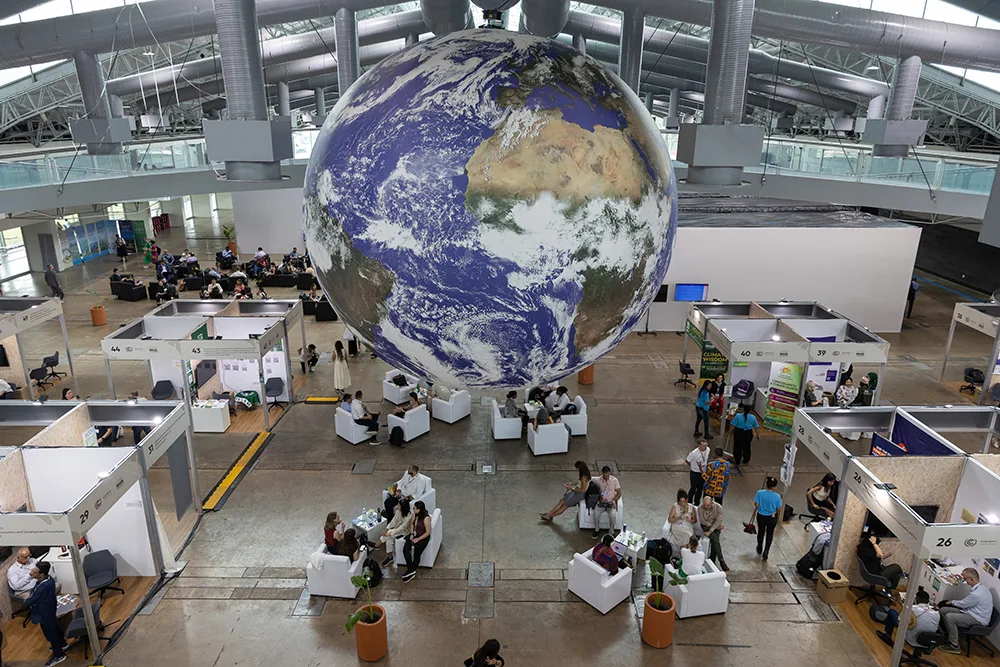
Higher education
With these two launches it is important to ask what is the role of universities? What is their responsibility? Recognising that the future will be very different from the past, universities must be at the forefront of designing and delivering the knowledge, skills and confidence to take on board the radical shifts required. The message throughout both the Jobs and Skills for the New Economy report and the Belem Health Plan was that if we value people, we value our planet. The answers lie in the wisdom of both sets of valuing; seeing them as one and seeing the efforts to bring about change not as costs but as redeemable investments. Both plans pointed to huge opportunity to change economies, to drive innovation, to create equitable and just transitions, that were built upon actions that had double and triple benefits.
Was COP successful?
How many COPs can go by where negotiators look at evidence, and then spend hours working how to navigate around it? Manipulate, revise, re-edit and re-present evidence – especially on phasing out fossil fuel usage. Citing science but not acting on it.
The biggest complaint about this COP was the failure to put into place the roadmap for the phasing out of fossil fuels. ‘The Global Mutirão: Uniting humanity in a global mobilization against climate change’ was presented on the 22 November. The word ‘Mutirão’ is from the language of the Tupi Guarani Peoples. It refers to a way of working together towards a common aim in a spirit of unity and togetherness. The proposal ‘recognizes the need for urgent action and support for achieving deep, rapid and sustained reductions of greenhouse gas emissions in line with 1.5°C pathways, noting that finance, capacity building and technology transfer are critical enablers of climate action’. It struggled to get the action pieces lined up to make it happen. Carbon Brief comments that 69 of the verbs used in the document were inactive verbs.
Statements were made about climate change and greenhouse gases but fossil fuel went unmentioned. There were some slightly absurd justifications of why not. A total of 86 countries called for a road map. Another 80 countries supposedly said it would be a red line. But no one was ever sure of which countries. It turns out that countries were on both lists. But we need to see COP as a moving community. Following the November conference, President Lula of Brazil called on ministries of finance, energy and environment to come together to produce a roadmap to a just and planned energy transition moving away from dependence on fossil fuels. Further decisions should be taken in April, when Colombia and the Netherlands will host a conference on strategies to phase out fossil fuels.
COP30 was busy. In and through the Action Agenda’s six themes were more initiatives – 117 plans to drive solutions forward, even though a message from multiple pavilions was that we don’t need new initiatives, we need to deliver on what we have already agreed. So much was happening on the surface and under the surface from the large-scale country-led negotiations to the small pavilion talks attended with only a few people. Yet in all the intersections, things happen which change the status quo. Relationships matter. This COP was a place where relationships were strengthened. COP fulfilled at least some of its purpose.
The beautiful city of Belem, named after that other ancient town of Bethlehem, will have returned to quieter days. The bright statues of Our Lady of Nazare which filled the skyline, bringing colour and hope, will still be lit up, signalling that hope is far greater than one single event. The work of the extraordinary institutes, such as the Evandro Chagas Institute, will continue to illuminate the scientific world with discovery and thoughtful, respectful, insightful approaches to mapping and managing infectious diseases, establishing early pandemic signals, understanding climate-driven changes, work carried out in partnership with the people of the Amazon River and its tributaries.
Belem offered choices – the choice to see the reality of climate change as it impacted people and the Amazon region, the choice to engage with the fusion of people, organisations, agencies, networks, country teams, collaborations, the choice to believe that change is happening.
Photo credits: Main image of a group of people at COP30, copyright UN Climate change by Hermes Caruzo/COP30; photo of COP30 Belem banner, copyright UN Climate Change/Kiara Worth; portrait of Professor Liz Grant courtesy of Liz Grant; photo of visitors walking through the Green Zone inside the COP30 venue, copyright UN Climate Change/Zô Guimarães; photo of the giant suspended globe inside the COP30 venue, copyright UN Climate Change/Kiara Worth.