
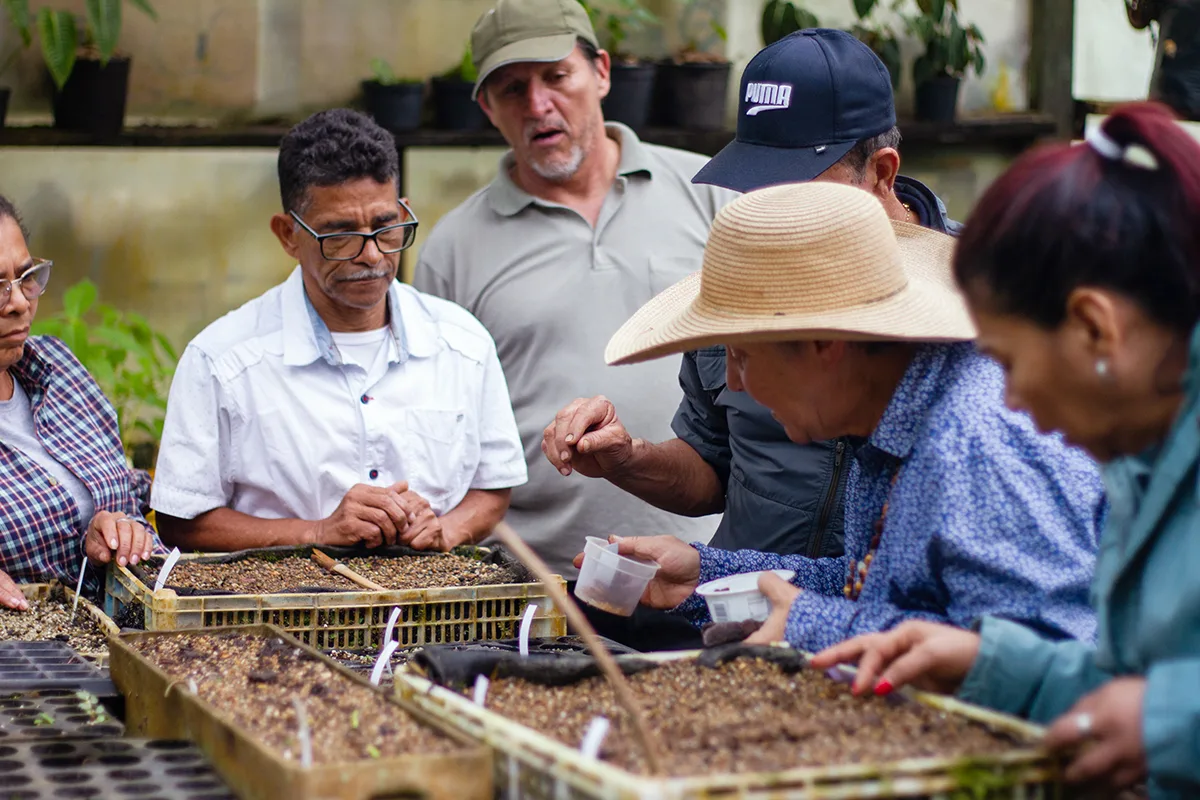
This is a crucial time for climate action. Could a turning point in the climate agenda rest on a shift from top down implementation of mitigation measures to something more collaborative?
Climate is not independent from the loss of biodiversity and deforestation. Solutions cannot be focused only on physical sciences. Taking stock now, might provide a platform for acknowledging that while a focus on resilience allows for a socio-ecosystem to maintain its functional integrity in the face of a shock. It also allows existing unjust and unsustainable practices to continue without questioning underlying sociopolitical assumptions.
This was discussed at a policy briefing published by International Research in Disaster Risk1, co-sponsored by the International Science Council. Incremental changes in governance systems can be identified when climate transition actions are implemented considering the wider socio-ecosystem. However, a dramatic change is needed, where transformative adaptation should address the root causes of vulnerability and poverty. Understanding the relationships between people and the environment requires questioning the current system, which favours capitalism and profit over human wellbeing and social equity.
Exploring co-production practices
Climate change measures tend to be implemented from the top down. They are directed by national or regional institutions toward communities, and frequently with a technocratic approach that seeks to solve risks through the construction of infrastructure or the use of technology.
These top-down approaches tend to ignore knowledge and actions that already exist at the local level, and that could be supported, for example, by technical or academic expertise. Tackling climate change impact and potential actions, beyond consultation and participation, requires deliberation and social learning. Both are essential to achieve transformative adaptation through learning by doing and constant experimentation.
In this context, our collaborative research in growing Latin American cities, hosted by Edinburgh’s Centre for Latin American Studies, has explored co-production practices. These enable communities to collaborate around their needs, challenge power imbalances and negotiate with authorities when implementing mitigation and adaptation actions.
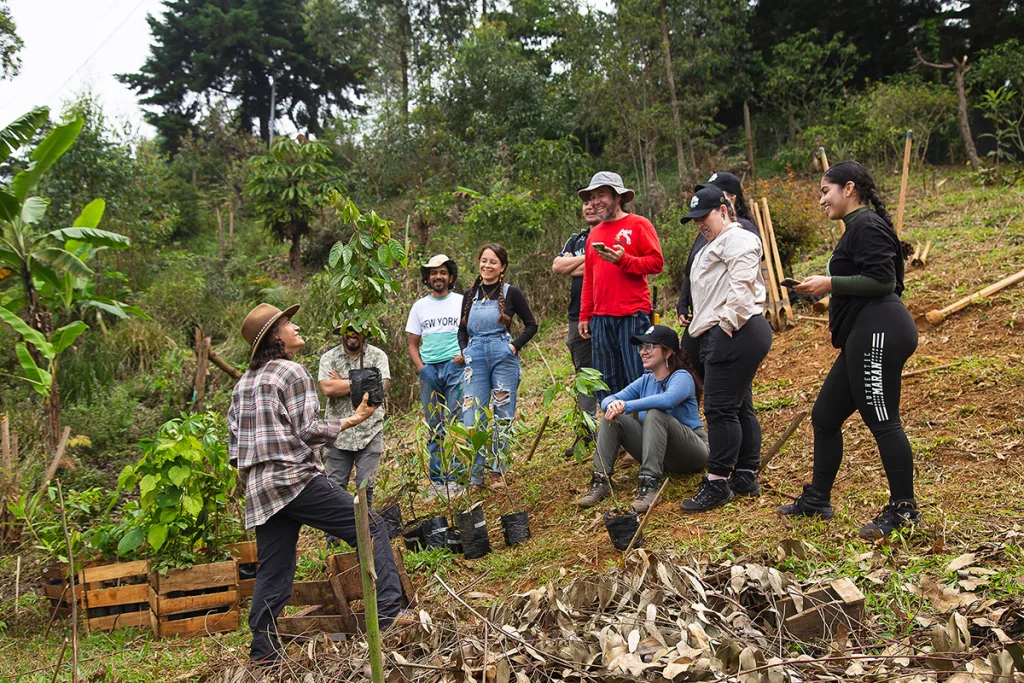
El Faro neighbourhood ecologic restoration project: community training by ‘Madretierra Permacultura’, Medellin, Colombia
Community-led action
Medellin, in Colombia, is an Andean city of 4.17 million inhabitants including its metropolitan area, and has high exposure to landslide risks on its urban edge. Our impactful action research collaboration demonstrated vulnerable communities’ knowledge and capacity for monitoring and mitigating landslides. Moreover, community-level pilot interventions in the vulnerable and informal rural-urban border of the city have integrated disaster risk management and climate change adaptation. This has been done through community-led actions around water management, nature-based solutions and forest restauration. These interventions bring together government and community to develop knowledge co-creation and inclusive decision-making processes informing policymaking and implementation.
Our research explored how co-production can restructure relations between civil society and the state. This is redressing power imbalances and antagonisms through bringing together different types of knowledge on a level platform. This approach to tackling climate challenges has led the implementation of appropriate, context-specific, negotiated, and agreed-upon mitigation and adaptation solutions through collective decision-making, multi-scalar negotiations, and power-sharing structures.
Generating successful interventions
Building resilience in the long term requires leveraging non-financial resources at the local level. This is done through articulating community knowledge and capacity with those of local government, not-for-profit organisations and academia. This is particularly important in urban areas exposed to the highest impact from disasters due to economic inequality and informality. Exploring the socio-ecological system within these urban areas, co-produced integrated climate and risk management actions that have focused on generating radical changes, creating opportunities for adaptive transformation, increased community agency, and reduced socioeconomic inequalities and poverty. Although this approach has generated successful interventions towards risk reduction and climate change adaptation, challenges remain around power imbalances and the longevity of interventions if these are not embedded within planning, climate and risk management frameworks.
Exploring avenues for tackling these imbalances and understanding how available data and associated actions related with increasing weather-related risks can contribute more effective early warning systems in urban areas is the aim of the World Weather Research Programme Urban-PREDICT project2. Integrating physical and social science, this project combines advanced weather prediction models with community and place-specific insights, including decision-making structures across a range of selected case study cities, to reduce vulnerabilities and enhance climate resilience in urban populations.
Our research demonstrates that strengthening technical and political community capacity and creating spaces for a dialogue of knowledges engaging local communities, academia and governments not only improve communities’ ability to influence policy. It also contributes to the construction of alternative urban planning approaches which may help address the impact of climate change faced by cities.
Image credits: Main image – Wilmar Castro Mera. El Faro neighbourhood group image – Andrés Peña.


