
During 2026, the National Year of Reading, we ask our teachers of all things literary, just what they recommend as a good read, and which books inspire them in their teaching.
Kate Ash-Irisarri, Lecturer in Late Medieval Scottish & English Literature
Which book do you love using the most in your teaching and why?
As a medievalist, I teach some wonderful texts but the book I love using most in my teaching changes because it’s usually the one that really gets students talking and sparks discussion. That’s very dependent on the class at any given time. For example, on my Death & Dying module, we read Pearl, a 14th-century poem. It’s about a father’s grief and his dream of speaking to his daughter. It’s really a contender for the best poem ever written. I love seeing students take on such a theologically complex poem and they still find those very human connections across the centuries. Equally, students this year have really engaged with Thomas Hoccleve’s Complaint, in which he writes about his mental health struggles. As a class, we had some fascinating conversations about the language of illness that Hoccleve uses and the way he describes his mind going off ‘to play for a while’. I’m always struck by how much students find similarities between the Middle Ages and the present, while recognising the important differences.
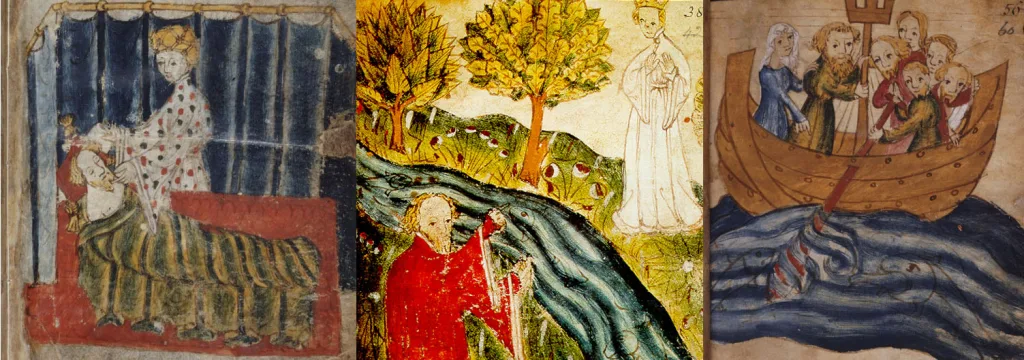
This year, I set up a Middle English reading group and we’ve been reading Sir Gawain and the Green Knight, a poem by the same author as Pearl. It’s a wonderful text because, while it appears to be quite a simple story about knightly adventure – and it really is a captivating story – it’s also about paying attention and critical thinking. I’ve been reading and teaching it for about 25 years now, and it’s still wonderful to see students’ surprise when they realise what’s happening in the poem.
Which book do you return to for inspiration and personal enjoyment, or do you never return to a title once you’ve read it once?
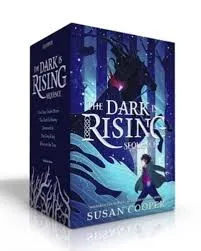
I return to teaching texts all the time, but there are several reading-for-pleasure books that I re-read; probably too many to mention! A couple of Christmases ago, I re-read Susan Cooper’s The Dark is Rising sequence, a series of five children’s books written in the 1960s and 1970s. I’d been teaching the first book, Over Sea, Under Stone, and it was such a pleasure to go back to the stories I enjoyed when I was younger, this time reading them with all the knowledge and experience I’ve picked up since then.
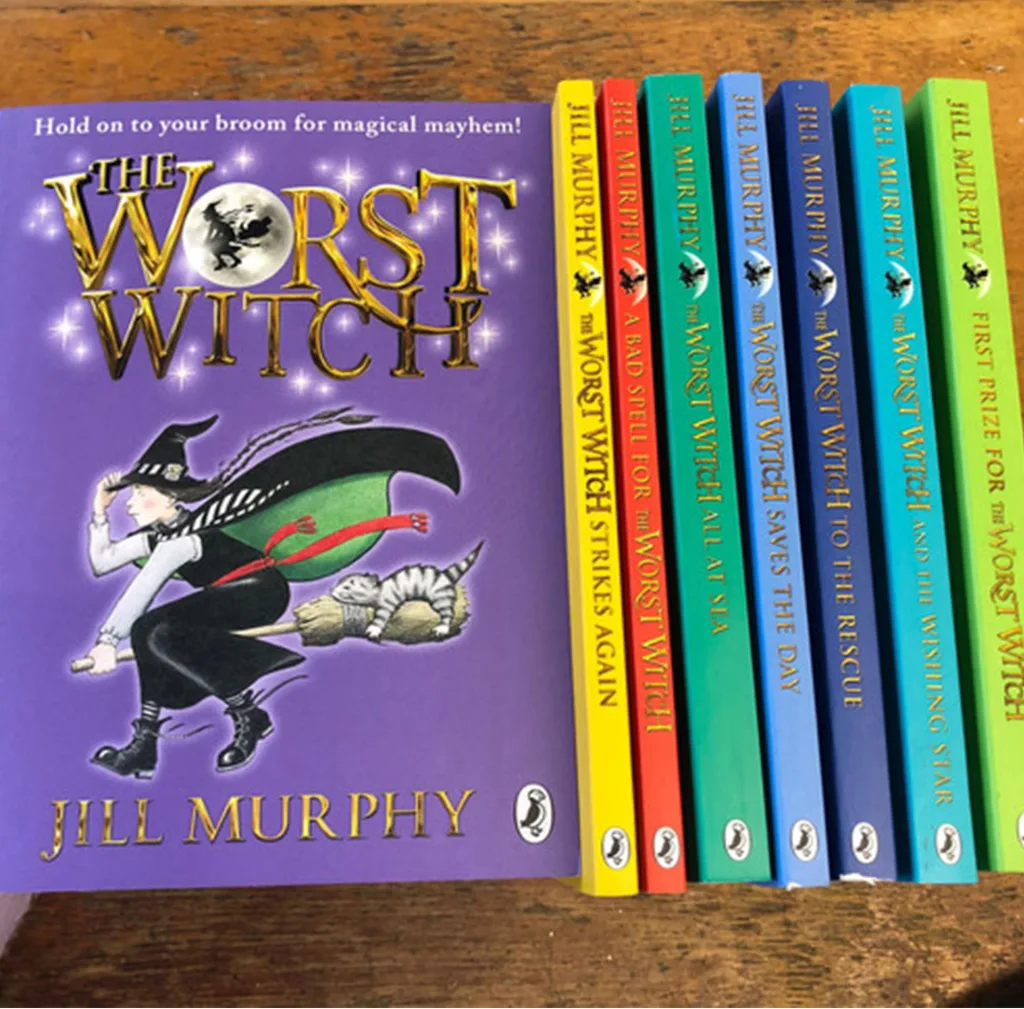
I’ve also been re-reading Jill Murphy’s The Worst Witch books with my daughter, who’s coming to them for the first time. It’s bringing back lots of memories of reading them as a child and allowing me to notice new details and ideas that I hadn’t appreciated before. That sense of renewed discovery is one of the greatest pleasures of reading, both as a scholar and as a reader.
What is your favourite quotation from a character in a book, or directly from the author that inspires you?
I don’t necessarily have a favourite quotation, but there’s a lovely medieval lyric about the Passion that really captivates me:
Now gooth sunne under wode:
Me reweth, Marye, they faire rode.
Now gooth sunne under tree:
Me reweth, Marye, thy sone and thee.
[Now the sun goes behind the woods/the Cross:
I pity, Mary, your fair face.
Now the sun goes behind the tree/the Cross:
I pity, Mary, your son and you.]
It amazes me how four lines, mostly repeating words, can carry so much meaning. It blends landscape and the scene of the Crucifixion. It sees the Passion through the eyes of Mary as a mother. It plays around with chronology, bringing together Biblical, medieval and contemporary time to situate its reader right at the foot of the Cross. It’s about wordplay, which medieval audiences loved. I just think it’s wonderful. I could wax lyrical about this for a very long time!
Which literary book do you wish you had written?
That’s really difficult and I’m not sure I can answer it. The book wouldn’t be the same book if it hadn’t been written by its author. I really am struggling with that one, possibly because I’m in awe of those who write fiction and poetry. That’s not where my strengths lie at all! Maybe I wish I was clever enough to write something like the lyric I mentioned earlier.
What books are in your top ten reads?
That’s so difficult to choose. Apart from things I’ve already mentioned and missing out a number of ‘big hitters’, I’d probably go heavy on the medieval literature, recommending:
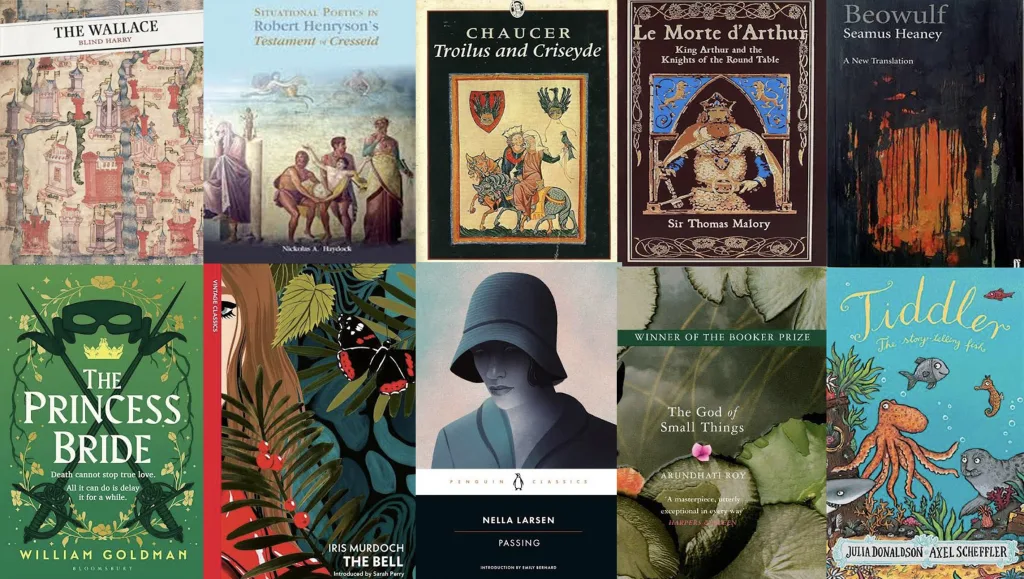
- The Wallace (far superior to Braveheart!) by a 15th century poet called Hary. It’s a polarising read because of its violence and vehement anti-Englishness.
- The Testament of Cresseid. Robert Henryson’s late 15th century reimagining of parts of Geoffrey Chaucer’s Troilus and Criseyde. It is set during the Trojan War and asks questions about redemption and literary reputation.
- Malory’s Morte D’Arthur, which, for me, is just fabulous.
- Beowulf. A great story. Seamus Heaney’s version is a fabulous adaptation for those who don’t read Old English.
In the non-medieval section and in no particular order:
- William Goldman’s The Princess Bride (1973). Most people probably think of the brilliant 1980s film. (If you haven’t seen it, you really should!) The novel is an eccentric blend of satire, romance, fantasy and adventure. It experiments with what we think narrative should do.
- Iris Murdoch’s The Bell (1958). Anything by Murdoch could have made it onto my list, but this was the first of her novels that I read.
- Nella Larson, Passing (1929).
- Graham Greene’s, The End of the Affair (1951). I realise that many of my choices revolve around questions of faith and the exploration of affect.
- Arundhati Roy’s The God of Small Things (1997). I fell for this book at a formative reading stage.
- Julia Donaldson’s Tiddler (2007), though if you asked my daughter, she’d probably say The Gruffalo!
What are you reading for personal enjoyment at the moment – and would you recommend it to your students?
I’ve just started Katherine Rundell’s Super-Infinite: The Transformations of John Donne. It has been sat on my shelf for a while now because I have a habit of buying books that I then don’t get round to opening. It’s being followed by Jeff Jarvis’s The Gutenberg Parenthesis, which a colleague has recommended to me.
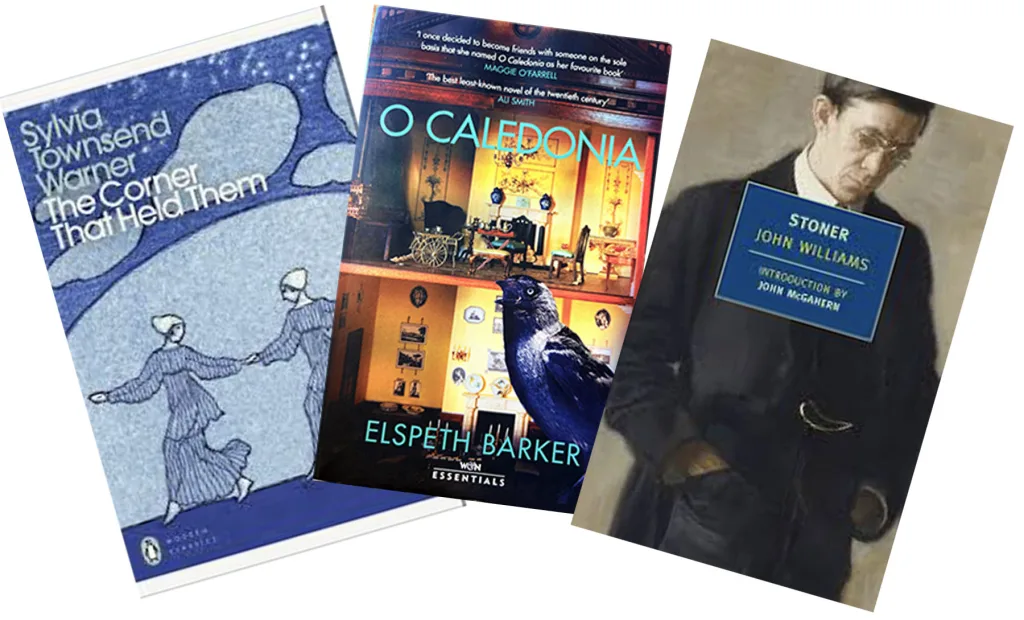
Rather than recommending books to my students, a number of books I’ve read recently have been recommendations from them. For example: John Williams’s Stoner, Sylvia Townsend Warner’s The Corner That Held Them and Elspeth Barker’s O Caledonia. The great thing about that exchange of recommendations is an opportunity to see what students are interested in, outside of course texts. And I get to read books that I perhaps wouldn’t have chosen myself, which is always a good challenge.
Last words
I’d love to mention the James Tait Black Memorial Prizes. I’ve been working with my colleague, Dr Désha Osborne, on deciding this year’s Biography Prize shortlist. As the oldest literary awards in the UK, the James Tait Black is the only major book prize judged by scholars and students. We had so many wonderful submissions and it was difficult to narrow that down to a shortlist of five. I’ve enjoyed hearing what our student judges make of the selection and how they’ve decided this year’s winner. For more information about the competition and the winners, readers might enjoy the latest series in our literary podcast Beyond the Books.